Asia's EVolution: Building cars is easy, fixing them isn't. Meet the hands behind China's EV boom
Part of CNA’s series on the forces powering electric vehicles in Asia, this piece follows the mechanics, technicians and sales workers scrambling to keep pace with China’s EV boom.
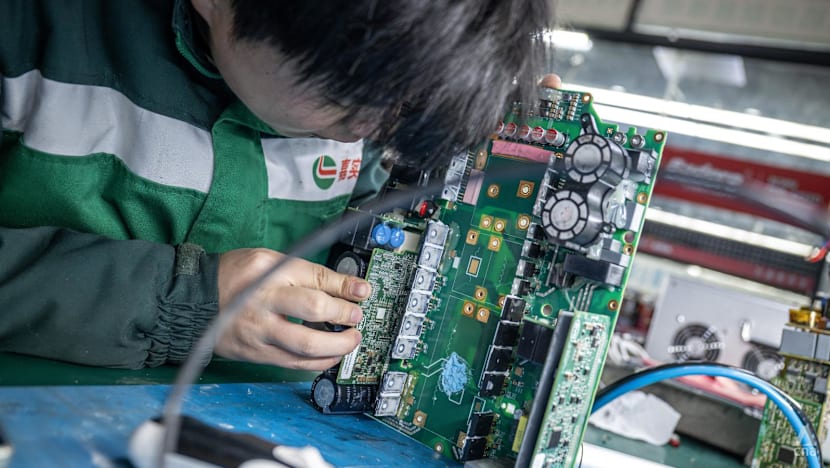
University student Bao Shijie, 21, at his workstation in Hefei Rongchuang Automotive Service. (Photo: CNA/Hu Chushi)

This audio is generated by an AI tool.


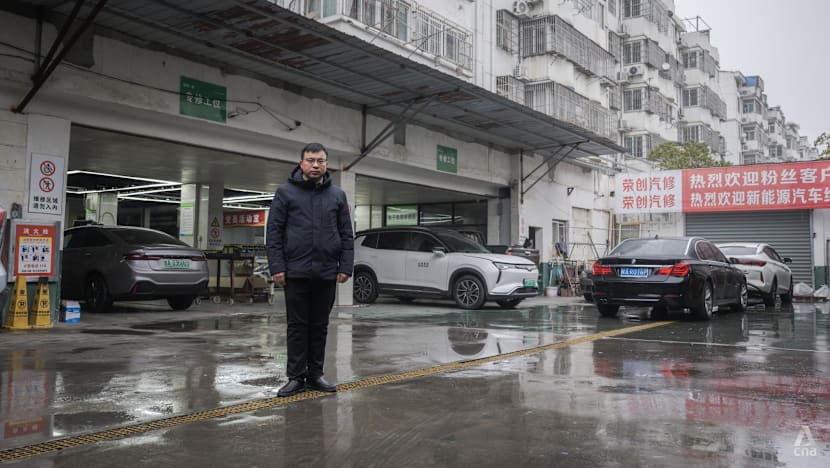
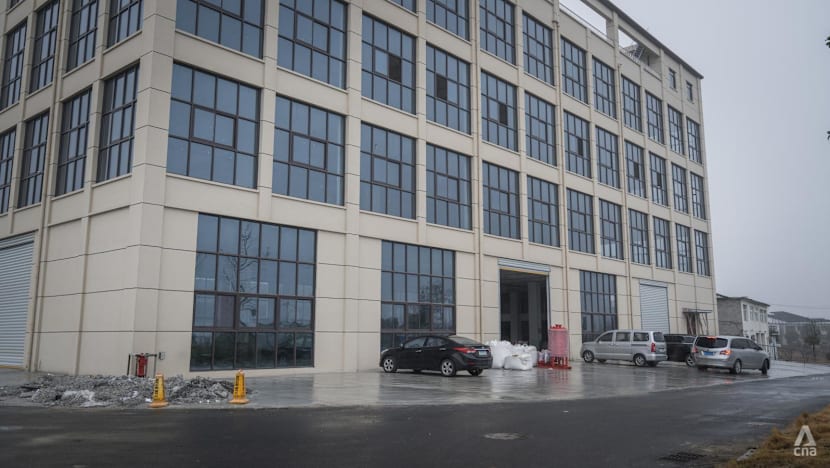
HEFEI, Anhui province: On a wet January morning, rain slicks the concrete forecourt outside Hefei Rongchuang Automotive Service. Its bright green facade cuts through the drizzle.
Red banners hang over the entrance, welcoming a new cohort of trainees in electric vehicle (EV) repair.
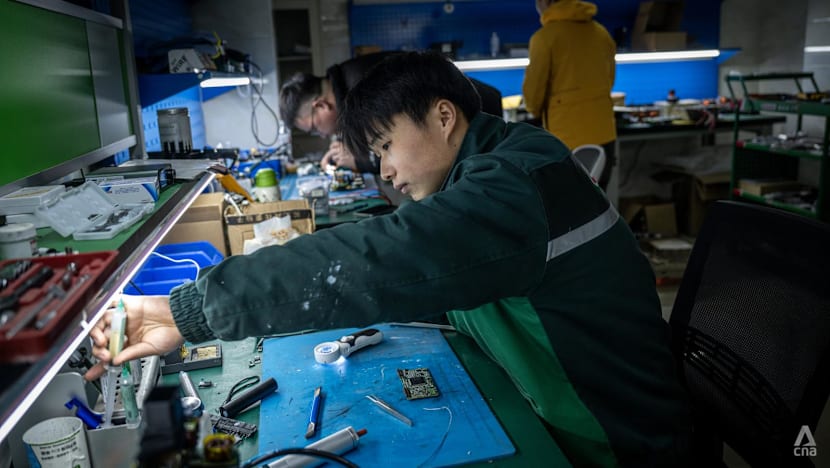
Inside, 21-year-old Bao Shijie splits his time between university lectures and the workshop floor.
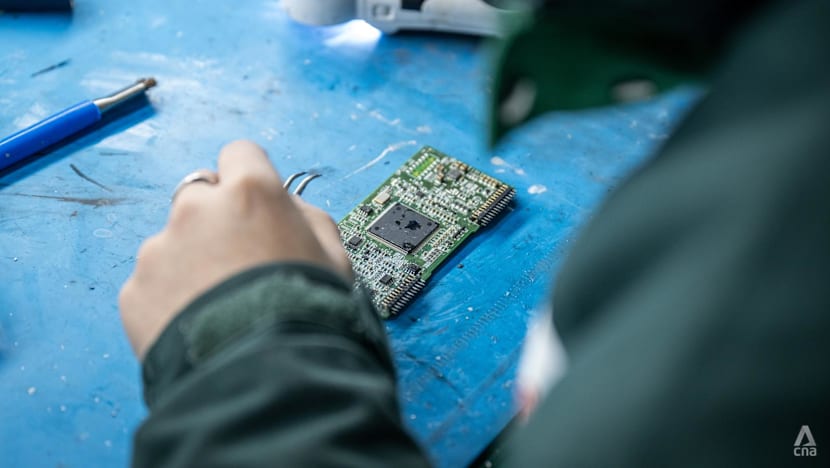
He hunches over a circuit board, tracing a maze of wiring under harsh fluorescent lights.





Around him, three other young technicians work through disassembled components at their stations.
Outside, the logos of more than a dozen Chinese EV brands line the wall in a neat grid - a promise of what the shop can fix.
Founder Zhao Fei stands near the entrance, phone pressed to his ear. The calls keep coming.
China has been the world’s EV superpower for more than a decade. In 2025, EVs made up over half of domestic car sales for the first time, with production exceeding 16.6 million units, according to the China Association of Automobile Manufacturers (CAAM).
But revolutions are not powered by sales alone.
Behind the gleaming showrooms and launch events are mechanics and technicians who diagnose faults by trial and error - the workers who keep the cars moving.
The city of Hefei has become one of the industry’s hubs - producing 1.37 million new-energy vehicles (NEVs) in 2024, with an industrial chain valued at 260 billion yuan (US$37.6 billion).
Officials aim to build a trillion-yuan cluster by 2027 capable of producing three million vehicles annually.
Yet the scale raises a bigger question: who will service them all?
Electric cars must still be sold, maintained and repaired long after they leave the factory floor, and the durability of China’s EV boom will depend on whether the workforce can keep pace.

ONE MAN’S GAMBLE
Zhao describes himself as among the “first to eat the crab” - a Chinese proverb for those who try what others hesitate to.
A former military man, he founded Rongchuang in 2013 as a traditional repair shop. By 2019, as Beijing pushed EV adoption and electric cars became common on city streets, he sensed a shift.
“If we hadn't caught the scent (early), our technicians might have been eliminated,” he said.
At the time, no one in Hefei could train them. EV penetration was far higher in coastal megacities, so Zhao paid for trips to Shenzhen, Chongqing and Hangzhou, bringing technicians along to observe workshops.
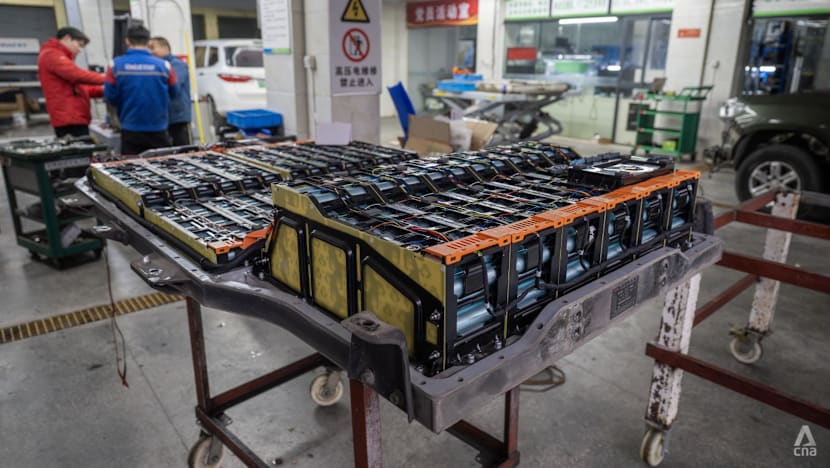
When they returned to Hefei they bought two EVs - one new, one used - and dismantled them piece by piece for practice.
“We looked at what the battery looked like inside, how the motor was installed, how the compressor was installed,” Zhao said.
“Once we understood our own cars, we could tell customers we had the capability to work on theirs.”
They also designed their own specialised tools for motor removal and diagnostics, investing about 100,000 yuan.
Today, EVs account for nearly 60 per cent of the company’s business. Zhao has trained close to 200 technicians and is in the process of renovating a five-storey, 6,000 sq m facility dedicated to EV training and repair.
TOO FEW HANDS
But one workshop cannot close a national gap.
China’s Ministry of Industry and Information Technology had projected that labour demand in NEV servicing could reach 1.2 million by 2025, up from 170,000 in 2015 - a shortfall of more than one million workers, though updated figures have not been released.
Industry leaders said the most acute shortages are in after-sales roles, particularly maintenance technicians.
CAAM data highlight the mismatch: about 65 per cent of NEV faults involve electric control systems, yet only 12 per cent of China’s roughly four million auto repair workers have been trained to handle them.
Fewer than 100,000 are considered skilled.
“The time investment is too high,” Zhao said, adding that it takes “at least three to four years to go from apprentice to master”.
“And in today’s market, young people don’t want to do it.”
"In this industry, I believe the most noble are the front-line service workers," he said.
"They must understand the principles. They must keep trying, keep making errors, keep attempting."
Still enrolled in university, Bao joined Zhao's shop after being offered an opportunity his classes could not provide.
Drawn to electronic circuits, he had spent six months repairing onboard chargers - even earning a low-voltage electrician’s certificate before formally entering the trade.
Much of his day is spent dismantling, diagnosing and rebuilding chargers, a process that can take hours. On a productive day, he services up to three vehicles.
The work carries risks. Once, a capacitor - a small component on the circuit board that stores electrical charge - exploded as he leaned over a circuit board.
“The electrolytes sprayed across the whole board,” Bao said.
“When you hear a bang, your heart jumps - and afterwards you feel a lingering fear.”
Handling high voltage systems was especially nerve-wrecking during his early days, Bao said - a heavy responsibility for someone barely out of his teens.


Zhao’s hardest moment was less dramatic but just as telling.
He recalled spending two sleepless nights in the workshop with two technicians, trying to repair a compressor made by a Chinese automaker that had gone bankrupt.
With no technical manuals or data to reference, Zhao and his team had to troubleshoot the problem from scratch. They managed to find a solution by the second night.
“I was happier than (if I had) scored 100 on an exam,” Zhao said.
He later shared the case with his peers. Hoarding knowledge serves no one, he said.
Zhao also sees his technicians as something like doctors.
“A doctor treats each person one-to-one - but a mechanic fixes one car that carries five people. Every repair is an act of responsibility toward everyone inside,” he said.
"If we don't approach it with reverence for life, and don't treat our work seriously, that's irresponsible."
TRADITIONAL MECHANICS IN TRANSITION
On Sanli Street, Hefei's oldest automotive strip, garages and workshops line the roads.
Their signs are faded and the heavy smell of engine oil hangs in the air.
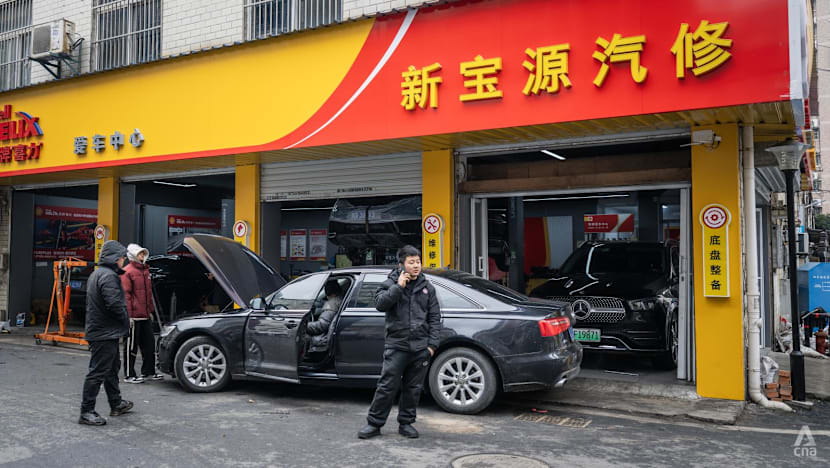
At one garage, Xinbaoyuan Auto Repair, three mechanics in padded jackets crowd around a black Audi - its hood popped open.
Nie, the workshop’s owner, who only gave his surname, moves between cars - his phone ringing constantly even after he breaks away to direct a repairman on a job.
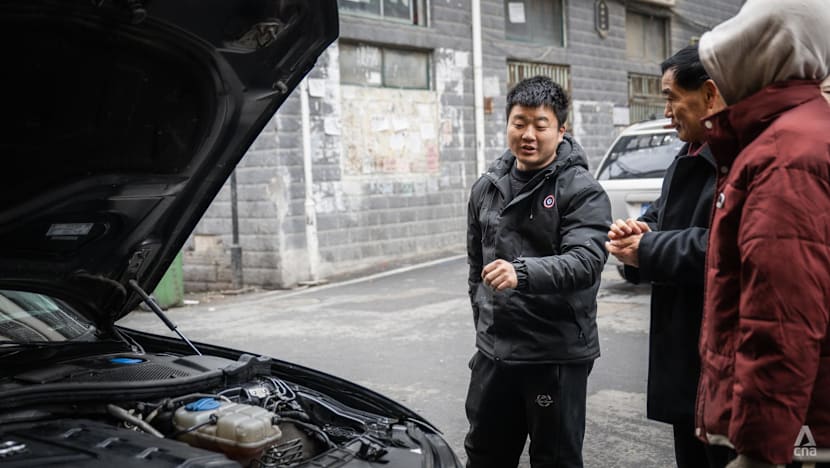
The 32-year-old lead technician has been in the trade for 15 years.
Growing up in a rural village, he spent a year in Shanghai working on luxury cars before returning to the city and opening his own store a decade ago.
Three years ago, he paid more than 10,000 yuan to attend a two-week EV skills training course in Guangzhou. It was mostly theory, Nie said. The real learning happens on the job.
Repairing and servicing EVs now make up a third of his business. Most vehicles are ride-hailing cars that have logged high mileage and are beginning to show wear and tear.
Related:



But working on Chinese EVs is not straightforward, Nie said. Unlike some established German brands, whose systems independent garages can access more easily, many Chinese EV makers tightly control their technology.
Third-party repairs are also often treated as violations of company policy.
You can’t just repair EV batteries. “If you do, it counts as infringement,” he said.
There is also little room for smaller garages and independent workshops to troubleshoot or modify components on their own, he added.
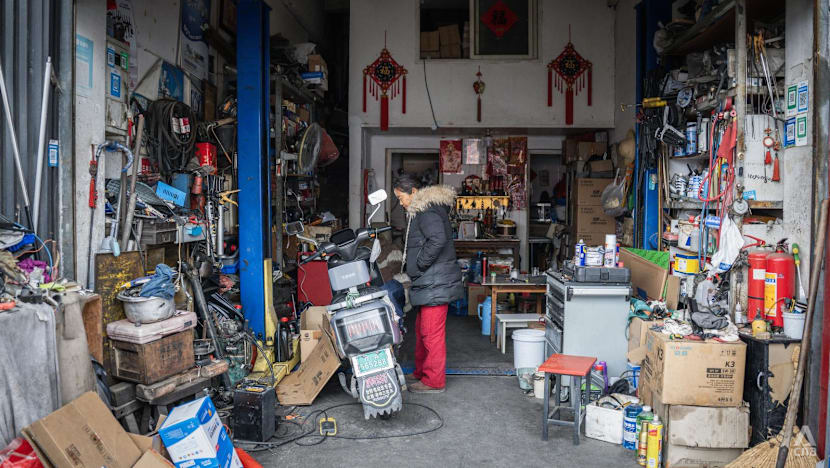
In a quiet corner of Anhui International Auto City, sits Xue’s workshop.
Now in her fifties, she has spent nearly 30 years repairing petrol cars with her husband.
She has no plans to switch.
Each EV brand requires its own proprietary diagnostic system, she said, unlike the universal tools that served a generation of gasoline mechanics.
“If you invest in one system, how long will it take to earn that money back?” she asked.
Her customer base is also shrinking.
Petrol cars are being driven less, while EVs require far less routine servicing, Xue said.
There is no engine oil or transmission fluid to change - just the occasional cabin air filter replacement and perhaps a gear oil change every 50,000km.
A petrol car owner might visit a workshop three or four times a year. An EV driver might come in only once.
“Even without hiring extra workers and doing everything ourselves, it’s still difficult,” Xue said.
“This year is tough - and next year will definitely be worse.”
SELLING - AND SERVICING - CHINA'S EV DREAM
Sales floors are evolving almost as fast as garages and repair bays are.
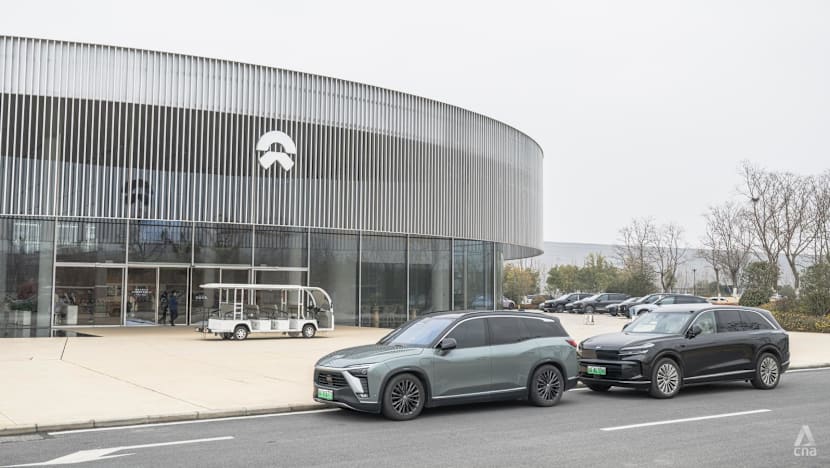
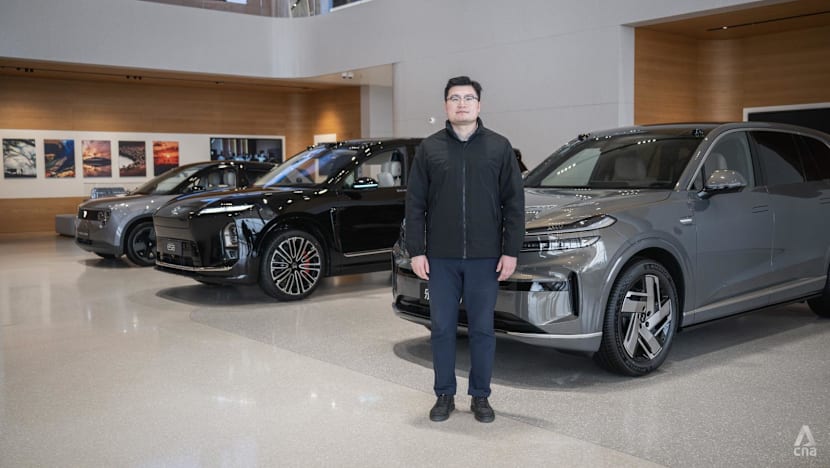
Inside NIO House - a flagship showroom and lifestyle space operated by Chinese electric vehicle maker NIO - in Hefei’s Xinqiao Industrial Park, Lin Zengfei greets visitors not just as a salesman, but as what the company calls a “NIO Fellow”.
The job goes beyond closing deals. Lin walks customers through battery options, explains charging and swap networks, and remains a point of contact long after the car leaves the showroom.
He spent five years at Volkswagen and another five at BMW before joining NIO in 2022.
“I’ve had the chance to witness and take part in the development of China’s EV market,” he told CNA.
“I feel quite emotional about this.”

Many former colleagues at BMW, Audi and Mercedes-Benz have also since made similar moves to domestic electric brands, Lin said.
The market has shifted just as dramatically. In 2020, NEVs accounted for 5.4 per cent of car sales in China - and by 2025, retail penetration had crossed 50 per cent, according to industry data.
With that change has come a new definition of selling a car, Lin said.
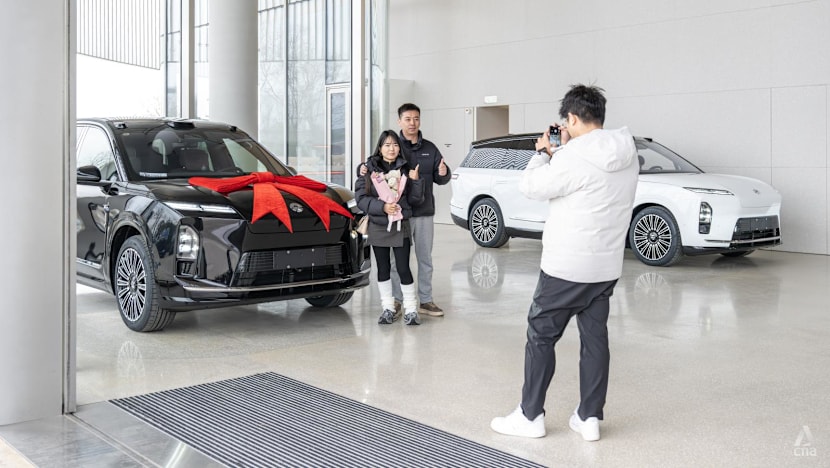
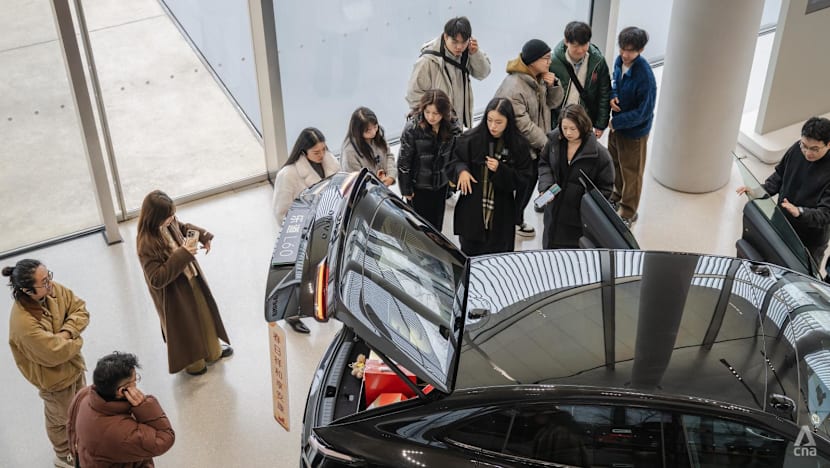
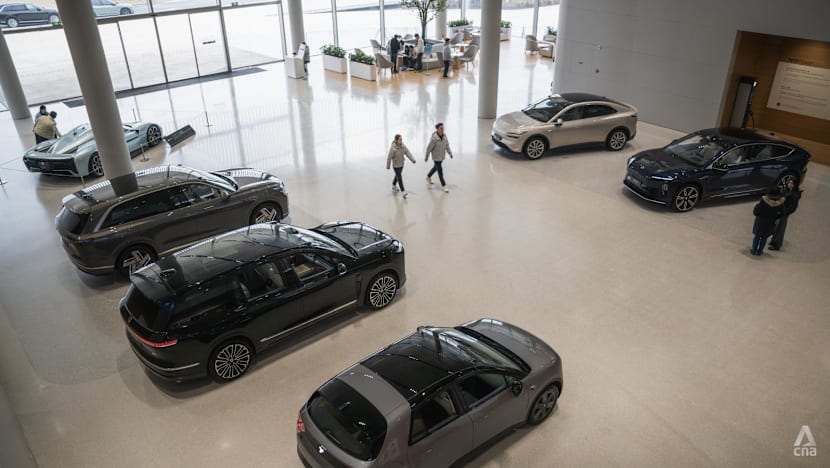
In traditional car showrooms, buyers ask where to purchase and where to service. Today, conversations revolve around battery health, software updates, charging networks and driving range.
NIO operates after-sales centres in most major cities and deploys around 7,000 roadside assistance staff nationwide to respond to breakdowns and emergencies.
Its battery-swap stations double as diagnostic hubs, running health checks on core systems during each exchange.
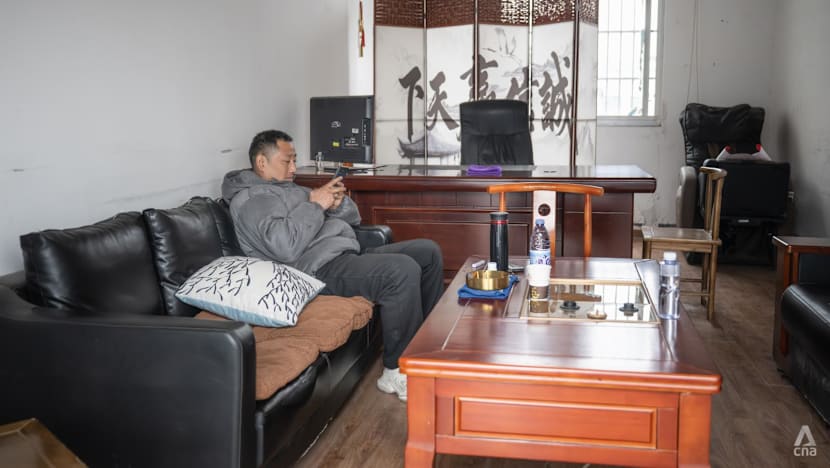
Liu Jia sells used cars in Hefei. Around 70 per cent of his customer base still opt for petrol vehicles.
Buyers worry about three things when it comes to secondhand EVs, he said - high mileage, battery health and the risk of EV fires.
If mileage exceeds 70,000km, “customers usually will not choose it”, Liu told CNA.
In the traditional petrol market, cars with 100,000 or 200,000km mileage are widely accepted.
Most EV makers offer lifetime battery warranties only to the first owner, Liu said.
Once a vehicle changes hands, that protection often disappears, he added.
There is no standardised inspection regime for used EVs.
Used EV buyers are, in effect, absorbing risks the ecosystem has yet to fully price: uncertain battery life, patchy warranty coverage and a repair network still catching up.
“It’s all about customer service,” said Tu Le, chief executive of Sino Auto Insights, a global mobility advisory firm.
In a bruising industry price war, margins are thin and competition is fierce. Brands that neglect the service side, he said, risk losing the sale altogether.
“The consumer has much more power. If you're not focused on being customer-focused, you lose that sale,” Tu added.


TALENT GAP
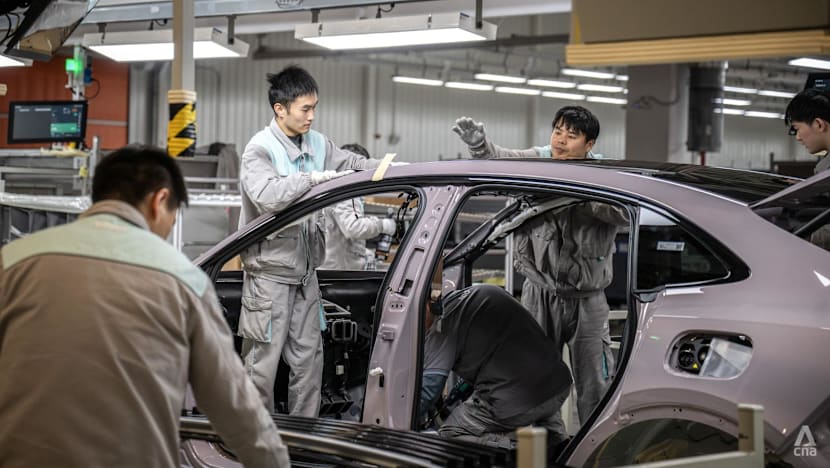
At a NIO manufacturing factory in Hefei, about 2,000 employees move along the production line.
Some are veterans from traditional car factories. Newer recruits arrive through partnerships with vocational colleges, including Anhui Vocational and Technical College and Anhui Automobile Vocational and Technical College.
Students begin as interns, paired with mentors and trained directly on the line. Many transition into full-time roles, with some eventually moving into after-sales service and repair.
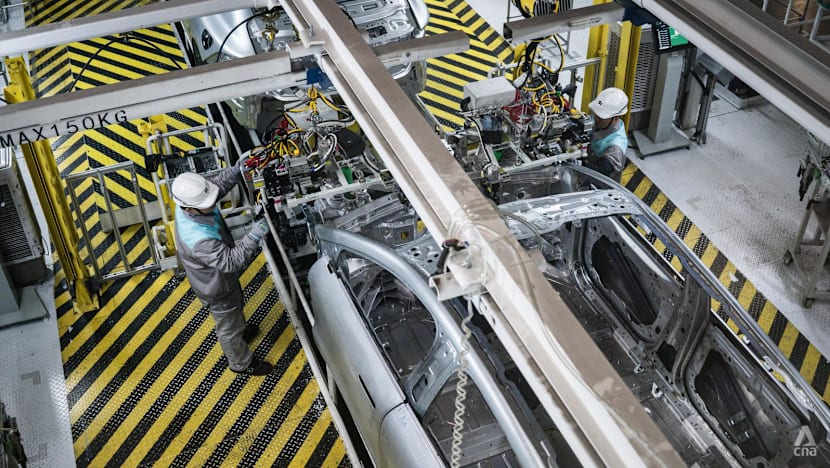
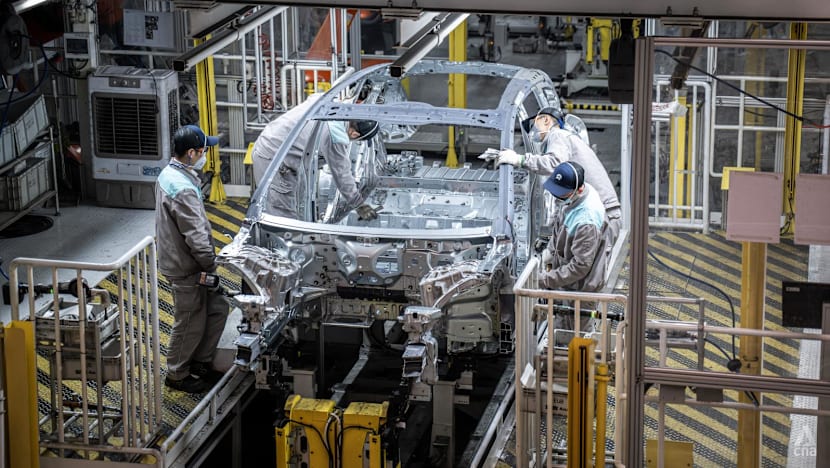
“Schools provide targeted training for technical and operational personnel,” said Yang Yi, public affairs director of NIO Manufacturing. “At the same time, our engineers participate in joint programmes at schools.”
Other EV companies are building similar pipelines. At least 10 vocational schools have launched - or are planning to launch - joint training institutes with brands like BYD.
At Shenzhen Polytechnic University, BYD engineers help design coursework. At Shaanxi Polytechnic Institute, teachers spend summers working at BYD factories.
JD Auto Service - the automotive arm of e-commerce giant JD.com - announced plans last year to establish more than 100 industry-education schools within three years, aiming to train 5,000 NEV repair professionals.
Still, some analysts question whether such efforts match the scale of demand.
“I think it’s a drop in the bucket,” Tu said. The deeper issue, he argued, is structural.
Many Chinese EV companies were founded by tech entrepreneurs with limited experience in automotive service.
“If they don’t understand it super well, they’re just not going to emphasise it,” Tu said.
“It's not because they're trying to neglect it,” he added. “It’s just that (their) decades in tech never exposed (them) to this part of the business.”
In a grinding price war, priorities are clear.
Every yuan spent refining vehicle platforms or pushing software updates is money not spent on service centres or technician training.
“Every six months, every nine months, I have to come up with a new or refreshed product," Tu said.
"Do I invest in that? Or do I invest in service centres?"
The imbalance is stark.
China’s NEV fleet surged from 4.92 million in 2020 to 31.4 million by 2024, according to official data. By the end of 2025, the number of new energy vehicles in China reached nearly 44 million, accounting for 12.01 per cent of the total number of vehicles.
By contrast, the traditional repair ecosystem - nearly 397,000 companies serving more than 300 million vehicles - was built over decades.
Fewer than 20,000 dedicated NEV repair companies now serve a fleet that has multiplied in just a few years.
Technology may ease some pressure, experts said. AI diagnostics, over-the-air updates and even robotics could reduce reliance on manual labour.
But for now, the bottleneck remains human.
“They’re so important because they’re the touchpoint for brands,” Tu said of front-line workers.
“If you don’t have a robust training programme … (they) probably won’t represent the brand the way you want (it).”
The implications extend beyond China. As EV makers push into Europe and other overseas markets, weaknesses in domestic service infrastructure could become liabilities.
“In foreign markets, they may only have one chance to get it right,” Tu said.
KEEPING THE FUTURE MOVING
Back at Rongchuang, the rain continues.
Bao Shijie bends over a charger, prying out a circuit board and retracing wires before testing each connection. It is quiet, methodical work but without it, a vehicle goes nowhere.
When asked if he worries about his future, he shrugs.
“Every household has vehicles,” he said. “Even if something happened, switching to another related field wouldn't be very difficult.”
He is 21 and still has time.
Xue, in her fifties, does not. Nor do thousands of workers in China's lower-tier cities who lack the capital and training to make the leap.
Hefei may be chasing trillion-yuan output targets but production is only one part of the equation. Cars must be serviced, repaired and resold - and trusted - over a full lifecycle.
“There's no playbook,” said Tu Le.
“China is building the plane as they fly it.”