China rejects ‘major power co-governance’, warns against bypassing UN in veiled swipe at US
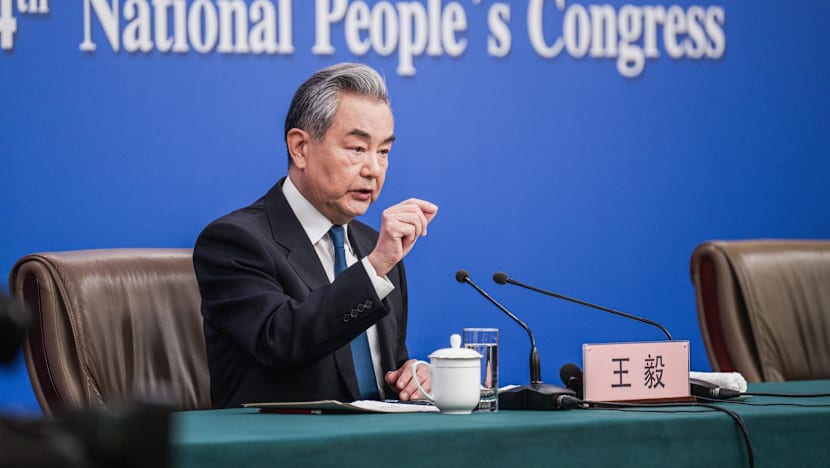
“(China does not) subscribe to the logic of major power co-governance,” said Foreign Minister Wang Yi in a Sunday (Mar 8) press conference during the Two Sessions.

This audio is generated by an AI tool.


BEIJING: China has rejected the idea that global affairs should be jointly steered by a handful of major powers, as its top diplomat sets out the country’s vision for global governance amid intensifying geopolitical tensions.
China does not “subscribe to the logic of major power co-governance”, Wang Yi said in rare direct remarks on Sunday (Mar 8) in a press conference on the sidelines of the Two Sessions.
Wang also warned against bypassing the United Nations (UN) through alternative mechanisms - remarks that appeared to be a veiled swipe at recent United States initiatives, including its Board of Peace.
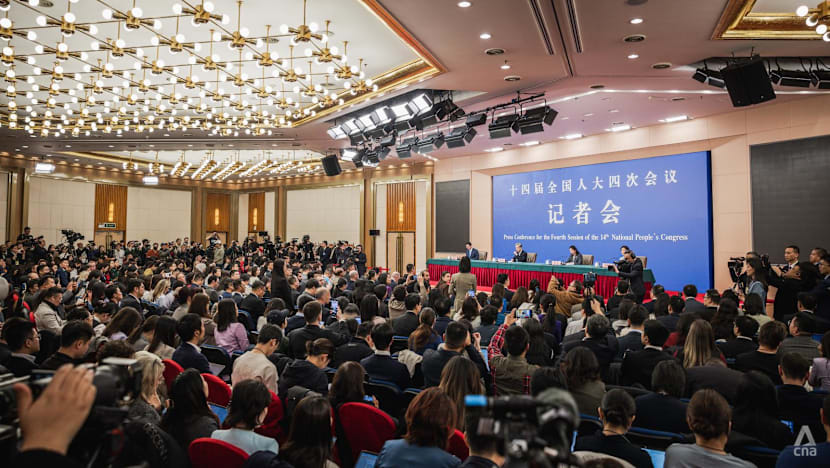
During the wide-ranging 90-minute press conference on Sunday, Wang fielded 21 questions from domestic and foreign media, setting out Beijing’s positions on major-power rivalry, its vision for the world order and the trajectory of China-US ties.





He also addressed a series of current geopolitical flashpoints - from the latest escalation in the Middle East to tensions with Japan and disputes in the South China Sea.
Wang’s remarks on global affairs were in response to a question that cited his own description of China-US ties as the most consequential relationship in the world.
The reporter asked whether a joint-responsibility model - floated previously by United States President Donald Trump and others - could help the two powers prevent confrontation and reassure the world that China’s rise would not destabilise the existing international system.
Wang signalled that Beijing does not accept a framework in which a handful of big countries co-manage world affairs.
“Looking back at history, every episode of rivalry among major powers and bloc confrontation has brought disaster and suffering to humanity,” said Wang, who is China’s foreign minister and the country’s top diplomat by virtue of his concurrent role as head of the Central Foreign Affairs Commission of the Communist Party.
“For this reason, China will never follow the old path where a strong country inevitably seeks hegemony, nor does it subscribe to the logic of major power co-governance.”
On China-US ties, Wang said the relationship “concerns all sides and affects the world”, warning that a lack of engagement would only lead to misunderstandings and misjudgments, while conflict and confrontation would harm not just the two countries but the broader international community.
China and the US are both major powers that cannot change each other, he said, but they can change the way they interact.
That requires mutual respect, adherence to the bottom line of peaceful coexistence and efforts to pursue win-win cooperation - an approach he said serves the interests of both peoples and meets global expectations.
Wang noted that exchanges between the two heads of state have provided “important strategic guidance” and helped stabilise ties despite past turbulence.
The veteran diplomat expressed hope that 2026 could become a “landmark year” for healthy, stable and sustainable development.
The optimism comes as both sides line up a series of high-level engagements.
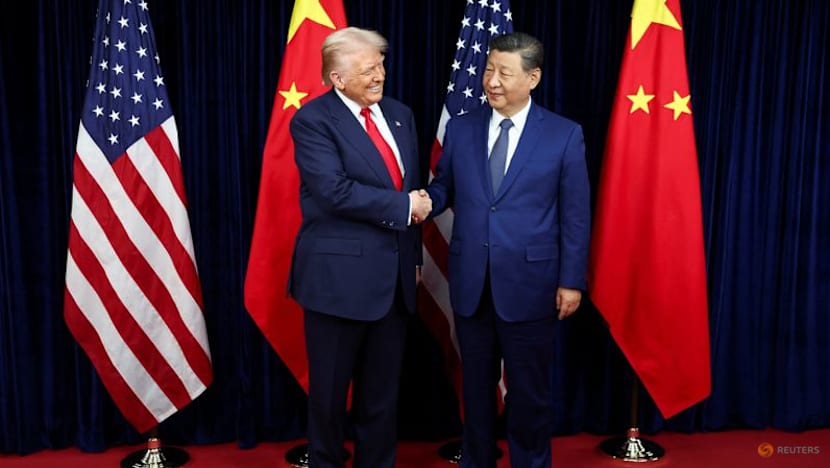
US President Donald Trump is slated to visit Beijing from Mar 31 to Apr 2, according to the White House, with a possible reciprocal visit by Chinese President Xi Jinping to the US later in the year.
Beyond bilateral meetings, the APEC leaders’ summit will be held in Shenzhen in November, while the G20 summit is scheduled to take place in Miami in December.
AN “EQUAL AND ORDERLY” MULTIPOLAR WORLD
Reiterating Beijing’s view that the world is moving towards multipolarity, Wang said China’s foreign policy remains grounded in its constitution and shaped by principles upheld by successive leaders.
The veteran diplomat pointed to China’s commitment to an independent foreign policy and the path of peaceful development, stressing that regardless of how the international landscape evolves or how far China advances, “China will never seek hegemony and will never expand”.
Against this backdrop, Wang outlined what he described as Beijing’s vision for the future international order - building “an equal and orderly multipolar world”.
By equal, he said, countries - regardless of size or strength - are all members of the international community, each able to find its place and play its role.
By orderly, he added, all nations should abide by universally recognised rules, particularly the purposes and principles of the UN Charter that underpin international relations.
Building such a system should be a shared responsibility, Wang said, with major powers bearing greater obligations to “observe rules, honour commitments and uphold the rule of law”.
China, he added, is willing to remain a “constructive force” in shaping this transition and to work with other countries to usher in what he described as a multipolar world.

UNITED NATIONS MUST BE UPHELD: WANG
In his Sunday press conference, Wang also underlined China’s firm backing for the United Nations, warning against attempts to sideline the multilateral system through smaller, exclusive groupings.
“Bypassing the UN to create alternative arrangements, or piecing together various small blocs and exclusive circles, is neither supported by the people nor sustainable,” he said.
Although Wang did not refer to any country or initiative by name, his remarks come amid growing debate over alternative forums - including proposals by Washington and its allies - to create new mechanisms for global coordination.
Trump has established a so-called “Board of Peace” to oversee post-war arrangements in Gaza, although the US president has said its remit would expand to tackle other conflicts globally.
Framing the UN as the central pillar of global governance, Wang said its leading role must be upheld rather than weakened.
“Although the United Nations is not perfect, the world would be far worse without it,” Wang said.
The UN must “keep pace with the times”, and reforms should aim to better reflect the interests and representation of developing countries, he added.
A key priority, he said, is to enhance the voice and representation of countries in the Global South and better reflect the legitimate demands of developing nations, with the goal of building a “more just and equitable” system.
Noting how China is both a founding member of the UN and a “steadfast supporter” of its mission, Wang said Beijing is acutely aware of the expectations of developing countries.
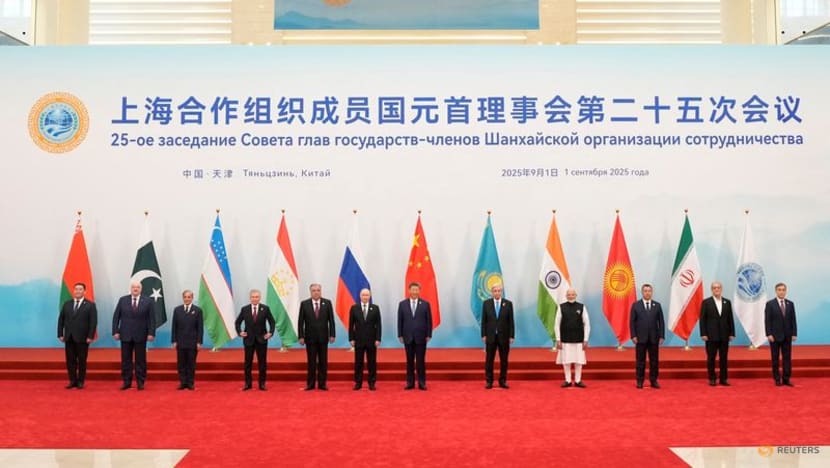
Platforms such as the Shanghai Cooperation Organization and BRICS both take adherence to the UN Charter as their guiding principle and serve as avenues for exploring reforms to global governance, he highlighted.
China, he added, is calling on more countries to back the Global Governance Initiative, urging the international community to “revitalise, uphold and strengthen” the UN.
The Global Governance Initiative refers to Xi’s sweeping vision for reforms to the international order, anchored in a commitment to sovereign equality, the rule of law and multilateralism.
Wang highlighted how the initiative has garnered support from more than 150 countries and international organisations. He added that a “Group of Friends of the Global Governance Initiative” has been launched at the UN headquarters in both New York and Geneva, with many developing countries participating.
OTHER TAKEAWAYS
IRAN
“A war that should never have happened” was how Wang described the widening conflict in the Middle East, which was sparked by US-Israel strikes on Iran that prompted retaliation.
He said Beijing’s position can be summed up in one phrase - “ceasefire and an end to hostilities”, echoing remarks made just days ago.
“Force is not the way to resolve problems,” Wang said, warning that resorting to arms only “breeds new hatred” and sows the seeds of further crises.
The sovereignty, security and territorial integrity of Iran and Gulf states “must be respected and must not be infringed upon”, Wang said, adding that the world must not revert to the “law of the jungle”.
He also emphasised that the people of the Middle East are the “true masters of the region”. “Plotting colour revolutions or seeking regime change will find no popular support,” Wang said.
Major powers, he said, should “exercise their strength in good faith” and play a constructive role in restoring order and stability to the region.
JAPAN
When asked about China-Japan ties, Wang said the direction of bilateral relations depends on the choices made by Tokyo.
Ties have been strained since Japanese Prime Minister Sanae Takaichi’s remarks in November last year that a Chinese attack on Taiwan - the self-ruled island China views as its territory - could constitute a situation threatening Japan’s survival.
Calling Taiwan “China’s internal affair”, Wang asked bluntly: “What qualification does Japan have to intervene?”
“As is well known, the exercise of the right to self-defence is premised on a country being subjected to an armed attack,” he said. “If something were to happen in China’s Taiwan region, what right would Japan have to exercise the right of self-defence?”
He warned that history shows how a “state of survival crisis” had once been used as a pretext for aggression, adding that China “will never allow anyone to justify colonialism or whitewash aggression again”.
TAIWAN
Wang also repeated familiar talking points on Taiwan when asked about the risk of an accidental clash in the Taiwan Strait amid heightened tensions.
He described Taiwan as “the core of China’s core interests” and as a red line not to be crossed.
The veteran diplomat said the self-ruled island has been part of China’s territory “since ancient times” and “will never become a country”.
Citing a series of post-World War II legal instruments, he said Taiwan’s status has been “firmly settled”, and any attempt to create “two Chinas” or “one China, one Taiwan” is “doomed to fail”.
“The historical process of resolving the Taiwan question and achieving China’s complete reunification is unstoppable,” he said.
“Those who follow the trend will prosper; those who go against it will perish.”
EUROPE
On Europe, Wang described it as “an important pole in a multipolar world” and “a key force in safeguarding the stability of the international order”.
“The stability of China-Europe relations stems from shared interests, and their certainty comes from mutual benefit and win-win cooperation,” he said, adding how bilateral ties have “steadily warmed” over the past year.
Wang said the key to steady progress in relations is for Europe to develop a correct perception of China, adding that more Europeans now see China “not as a competitor but as a global partner”, particularly among younger generations.
Pushing back against protectionism, he said China-EU economic ties are rooted in complementarity, arguing that “interdependence is not a risk” and “building walls and barriers will only isolate oneself”.
In a pointed remark, Wang said Europe should step out of the “small attic” of protectionism and into the “gym” of the Chinese market to strengthen its competitiveness.
Beyond global governance, Wang turned to China’s immediate neighbourhood, pushing back against suggestions that Beijing’s growing influence has unsettled regional stability.
A reporter had asked how Beijing assesses its surrounding environment after a year marked by political changes in several neighbouring countries and an apparent rise in disputes among regional states.
Casting China as a stabilising force in Asia, Wang rejected comparisons with what he described as “certain traditional major powers” that carved out spheres of influence or fuelled bloc confrontation.
“Just imagine if China, like certain traditional major powers, were keen to carve out spheres of influence in its neighbourhood, stoke bloc confrontation, or even pursue policies that harm its neighbours for its own gain,” he said.
“Would Asia still enjoy the stability it has today? Would the international community still be able to share in Asia’s development opportunities?” Wang questioned.
“The facts show that China has consistently served as an anchor of regional security, an engine of growth and prosperity, and a champion of Asia’s shared values,” Wang said.
Saying Beijing was “gratified” to have played such a role, he added that China stands ready to make even greater efforts to safeguard stability and development in the region.