I pictured a financial future I don’t want – and it changed how I handle money
Already caving on the money goals you set for yourself just a month ago? It's not because you're lazy or irresponsible, finance author Dawn Cher says.

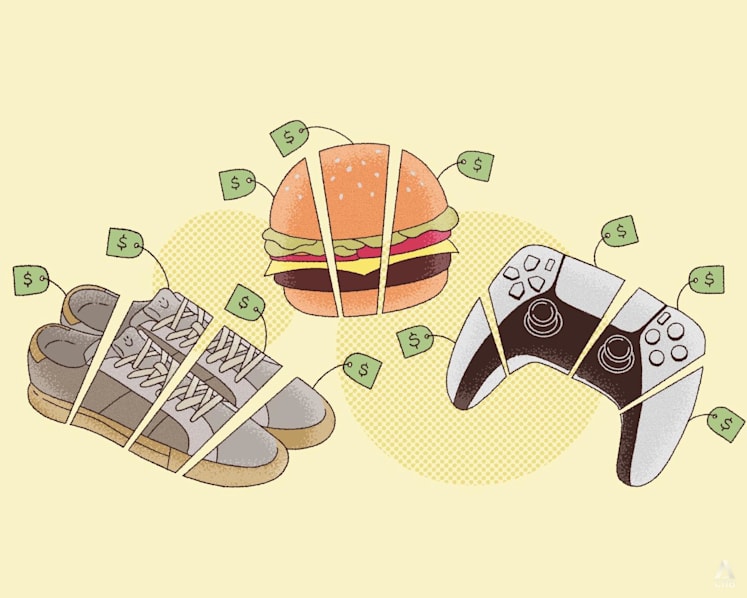
Most financial goals are too abstract to change behaviour, so the goals you set must be able to operate under real conditions, finance writer Dawn Cher said. (Illustration: CNA/Nurjannah Suhaimi, iStock)

This audio is generated by an AI tool.


Every January, I see the same conversations surface. Friends tell me they want to "save more this year", "cut down on spending" or "finally get serious about investing".
Some of them even ask for spreadsheets, apps or rules they can follow.
And yet, a few months later, most of those resolutions fade.
I know this pattern well, because I've watched it play out among my friends and the people around me every single year.
Even as their careers progressed and incomes rose, their anxiety didn't disappear.





They set goals on paper, but they never felt like they were truly in control of their finances.
Pay raises were matched by lifestyle "upgrades" or more frequent exotic holiday destinations.
Over the years, seeing them repeat the same mistakes again and again, what I've observed is that financial resolutions often fail not because people are lazy or irresponsible, but because they're built on the wrong foundations.
WHY GOOD INTENTIONS AREN'T ENOUGH
Good intentions can feel reassuring. They lead us to believe that once we decide to do better with our money, the rest will follow.
But a resolution to "save more" offers little guidance when small, everyday decisions pile up – whether it's saying yes to taking a taxi home instead of squeezing onto a crowded train or bus after a long day, or justifying your purchase of Blackpink concert tickets (VIP seats, no less, for all three days) because it's been years since they performed in Singapore.
In these situations, spending doesn't feel irresponsible. It feels justified.
And that's precisely why intent alone is not good enough. It doesn't tell us how to act when emotions, pressure or habit take over.


Another example: Resolving to "start investing" can quickly take a backseat when other priorities crop up.
Unless you make a clear plan with concrete steps or even schedule it in your calendar, resolutions like these tend to be pushed aside each time.
Without a clear bridge between today's choices and tomorrow's outcomes, our good intentions will forever remain abstract.
Our behaviour doesn't end up changing because the goal was never catered to operate under real conditions. Instead, it was designed for an idealised version of ourselves – one who is calm, rational and never tired.
In other words, it is impossible to achieve.
IT'S NOT A WILLPOWER PROBLEM
I noticed something else: Financially capable people don't rely on willpower the way the rest of us do.
They aren't constantly summoning self-control to make "good" decisions.
Instead, they shape their surroundings so that the right choices happen with less effort, while the wrong ones require just enough resistance to trigger a pause.
This is one of the most overlooked reasons why your resolutions fail. You expect behaviour to change, but you leave your environments untouched.
If you want a resolution to stick, the more effective question isn't "How do I try harder?" but "How do I make the better option easier?"
I put systems in place so that my savings happened automatically, instead of depending on my motivation. I disabled notifications from my shopping apps and unsubscribed from marketing newsletters.
Good financial behaviour, in reality, is less about restraint and more about design.
Instead of relying on self-control, I started engineering the "defaults" in my own life.
Money moved automatically out of my pay cheque and into a savings account before I could second-guess it. Credit cards were removed from my accounts on online shopping platforms so that impulse purchases required an extra step. Bills were no longer something I reacted to randomly, but something I reviewed on a fixed schedule.
These weren't dramatic changes, but they reduced the number of decisions I had to make. And that matters more than you think when you're a busy adult like me, trying to juggle work and parenting.
We're not just managing money. We're managing our energy.
And when my energy is depleted, the most expensive decisions are often the ones that buy short-term relief: ordering food delivery after a long day, last-minute purchases because I forgot to plan earlier or tapping unnecessary conveniences simply because I have no bandwidth left to think.
When I change my environment to support good behaviour, discipline becomes less necessary.
My progress continues even when my motivation fades, which it always does.
REFRAME YOUR MONEY FAILURES
Another reason why people fail is in the lies they tell themselves: "I overspent again, I'm a failure at managing my money. I lost money in stocks, I'm not cut out for investing."
Why make such conclusions? Who doesn't make mistakes?


The biggest shift in my own financial journey didn't come from learning new tactics. It came when I stopped treating money as a monthly test of my character.
It took time, but I had to unlearn the habit of treating every financial misstep as a personal failure.
Yes, I've overspent before. I've made investments that didn't work out as planned. None of that meant I was "bad with money".
Managing finances is less about being perfect and more about steering.
You drift, you correct. Conditions change, you adjust.
Deviation isn't failure. It gives you information so that you can take back control and get back on the right path again.
PICTURE A FUTURE YOU DON'T WANT
Most financial goals are too abstract to change behaviour.
"Retire comfortably" or "be financially secure" sound sensible, but they do very little in the moments that matter most for our finances, especially when we're tired, pressured or justifying a decision that feels harmless in isolation.
What works better is being clear about what you won't accept.

For me, I've visualised a future moment that scares me more than any market crash.
There she was, the future me, an older woman no longer earning the same as she did before. She opens up her bank app and realises there isn't enough – not enough to make choices without anxiety, not enough to pay without having to do mental calculations first.
She thinks back to all the small decisions that felt harmless at the time, but added up to take her to where she is. She regrets it, but it is too late.
What unsettles me most isn't the money, but the thought that I might one day pass that burden to my children.
These outcomes that you want to avoid can often be more motivating than any target number or financial goal.
It also forces a question many people rarely ask out loud: if nothing changes over the next 10 years, what exactly am I normalising and who ultimately pays the price?
This makes it easier for you to take the actions to avoid the version of a future you refuse to accept.
CHANGES THAT DO STICK
Looking back, the progress that lasted didn’t come from dramatic promises I made to myself at the start of the year.
Instead, it came from small, subtle shifts that were easier to keep up with day after day.
They were easy enough that no one else noticed, but consistent enough that my future self would feel a difference.
I put systems in place so that my savings happened automatically, instead of depending on my motivation.
I disabled notifications from my shopping apps and unsubscribed from marketing newsletters.
I replaced distant, abstract goals with monthly check-ins. And when things went off track, I treated it as feedback rather than a judgment of my ability or identity.
Looking back, it wasn't any single resolution that mattered. It was noticing that the question isn't about whether we've set the right financial goals this year, but whether the life we're living today will make the years ahead easier to manage.
And in knowing that, it becomes easier for me to make decisions today that I won't have to undo tomorrow.
Dawn Cher, also known as SG Budget Babe, is the author of Take Back Control of Your Money and a podcast host. She has been running a popular blog on personal finance since 2014.