







CNA Explains: Why are the Houthis targeting Saudi airports?
Saudi Arabia's main international airport in Riyadh has been a repeated target of attacks by Yemen's Houthi rebels. CNA looks at why the Houthis are repeatedly targeting Saudi civilian infrastructure, and what this means for travel in the Middle East.
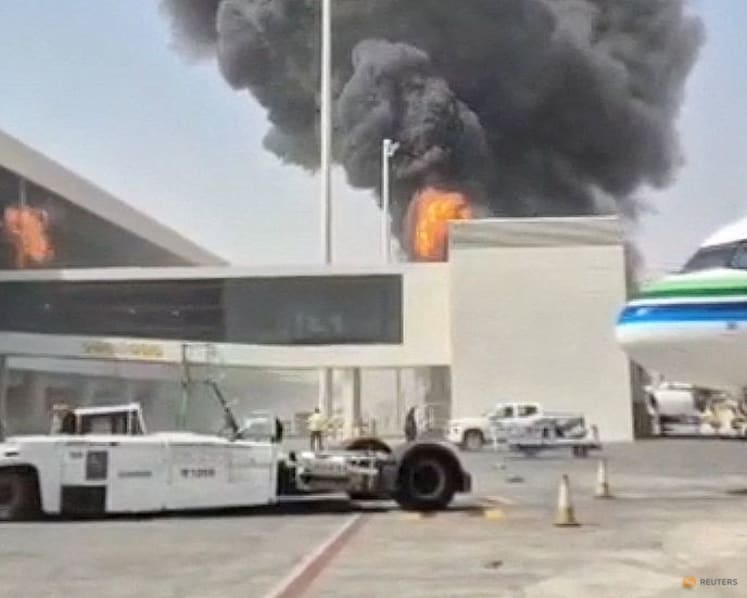
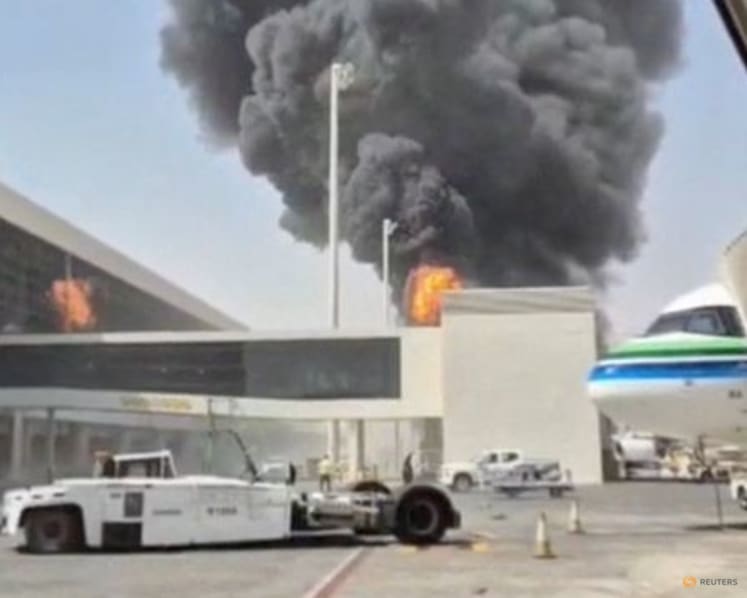
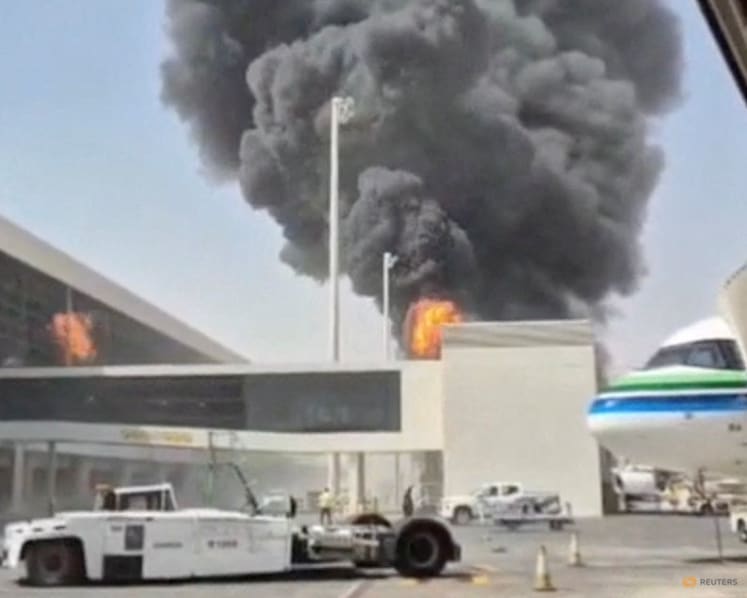
Smoke and flames rise from King Khalid Airport after Yemen's Iran-backed Houthis said they attacked the airport, in Riyadh, Saudi Arabia, Oct 8, 2026, in this screengrab obtained from a social media video. (Image: Social Media via Reuters)

This audio is generated by an AI tool.


Saudi Arabia's main international airport in Riyadh has become a repeated target of attacks by Yemen's Houthi rebels, disrupting flights and raising concerns about the security of civilian aviation in the kingdom.
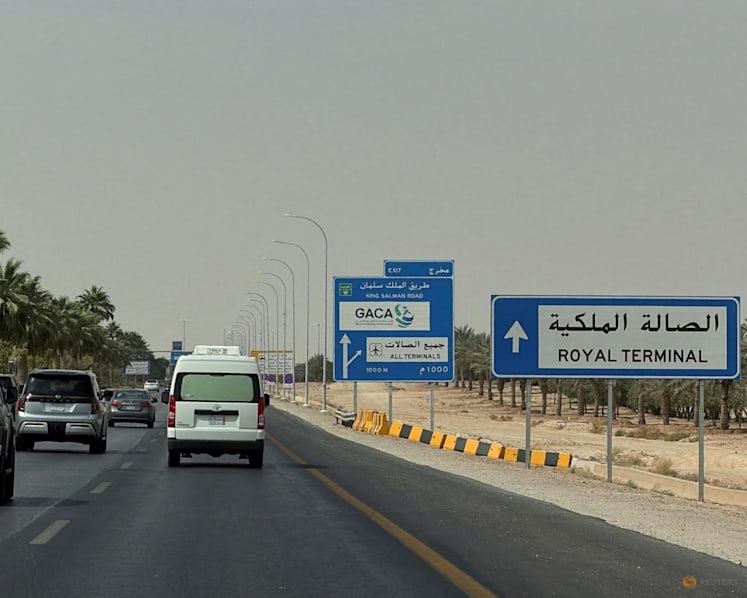
On Monday (Oct 26), the Saudi-led military coalition said it had intercepted a ballistic missile fired by the Houthis towards Riyadh, after the Iran-backed group claimed another attack on King Khalid International Airport.
The latest incident came as flights resumed at the airport following weeks of disruption, with the Houthis warning airlines and travellers that the facility remained "unsafe" and a "military target".
But the Houthis' attacks on Saudi airports are not new. As far back as November 2017, the group fired a ballistic missile towards King Khalid International Airport, which Saudi authorities said they intercepted.





In June 2019, a missile struck Abha International Airport in southern Saudi Arabia, injuring 26 civilians.
The latest escalation has been particularly deadly. Earlier this month, an attack on Riyadh airport killed 13 people and wounded more than 300, marking the deadliest such incident in Saudi Arabia in more than a decade.
The attacks have disrupted travel plans for thousands of passengers, forced the postponement of Saudi Arabia's flagship investment conference until 2027 and cast uncertainty over the kingdom's ambitions to become a global tourism and business hub.
CNA looks at why the Houthis are repeatedly targeting Saudi civilian infrastructure, and what this means for travel in the Middle East.
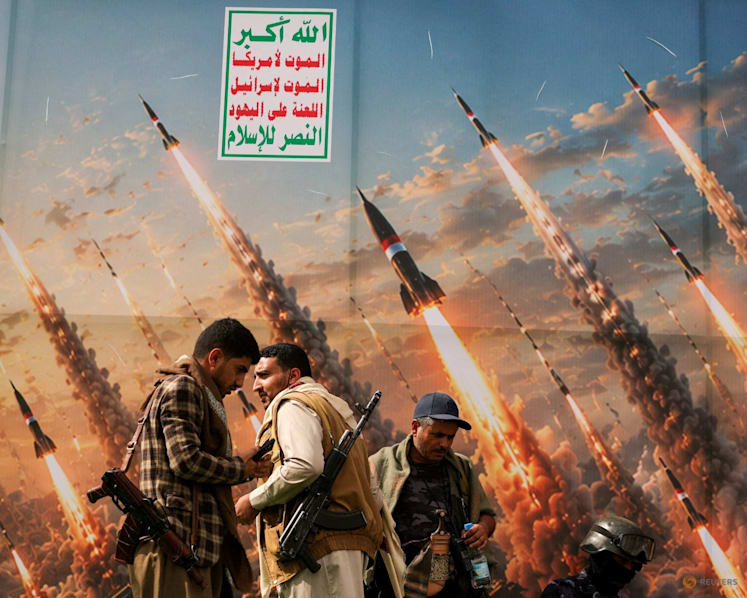
Why are the Houthis targeting airports?
Airports are among a country's most strategically and economically important infrastructure, making them particularly disruptive targets during a conflict.
The Houthis' raids on Saudi airports are part of a wider series of attacks on the kingdom's infrastructure, including on oil tankers and pumping stations.
Missiles have also been fired towards the Saudi cities of Taif and Yanbu. The latter is a major oil export hub on the Red Sea coast that has allowed Riyadh to bypass Iran's blockade of the Strait of Hormuz.
The Houthis have described Riyadh's King Khalid International Airport as a military target and warned airlines against using it.
However, the group's claims do not by themselves establish that the airport is a lawful military target under international humanitarian law.
United Nations secretary-general António Guterres has called for an immediate halt to attacks on civilians and civilian infrastructure, saying that they violate international law.
Besides Riyadh, airports in Abha, Dammam, Najran and Jizan have also come under attack.
The Houthis' targeting of critical infrastructure bears similarities to tactics used by their main backer, Iran, which has also launched attacks on infrastructure across Gulf Arab states.
What triggered the latest escalation?
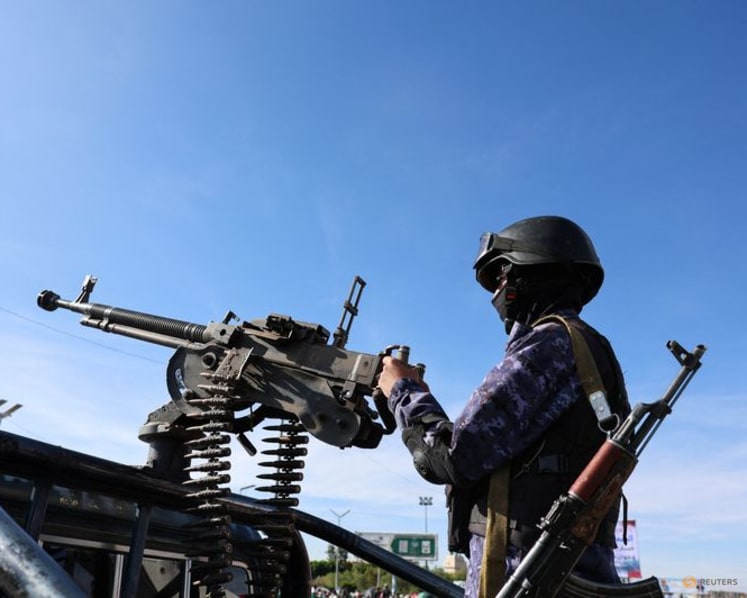
The conflict between Saudi Arabia and the Houthis dates back to 2015, when Riyadh led a military intervention in Yemen against the Iran-backed group.
A United Nations-brokered truce in April 2022 brought a significant reduction in hostilities, including cross-border attacks. Although the ceasefire formally expired six months later, a relative calm largely held.
Tensions flared again in July 2026 when the Houthis accused Saudi Arabia of launching airstrikes on Sanaa International Airport in Yemen's capital.
Yemen's internationally recognised government's defence ministry said the strikes were intended to prevent an Iranian aircraft from landing at the airport.
The Houthis subsequently launched missile and drone attacks on Abha International Airport, with no casualties reported.
The group also declared a maritime blockade of Saudi Arabia and began targeting its ships, territory and oil facilities, before launching a major offensive in September in which they seized Yemeni government-held territory along the Red Sea coast.
The Houthis have also reported frequent Saudi airstrikes on areas under their control.
What impact are these attacks having on Saudi Arabia?
The Houthi attacks have severely disrupted Saudi Arabia's aviation sector, forcing Riyadh's King Khalid International Airport to close for two weeks before resuming operations on Sunday (Oct 25).
The fallout has extended beyond aviation, with several major international events cancelled, postponed or relocated over security concerns.
Saudi Arabia has postponed its flagship Future Investment Initiative conference until 2027, while organisers of the prestigious motor sport race Dakar Rally on Sunday said it would move to a different location.
Golf's Asian Tour postponed the Saudi International indefinitely and cycling's Urban World Championships was cancelled earlier this month, while the tennis tournament Six Kings Slam was postponed to December.
These disruptions come as Saudi Arabia pursues its Vision 2030 plan to diversify its economy.
Prolonged instability could undermine investor confidence and make it harder for it to attract international visitors, businesses and major events.
The country's energy infrastructure has also come under threat.
In September, Saudi Arabia temporarily shut down its 1,200km East-West pipeline as a precaution after a drone attack that Riyadh and Baghdad said originated in Iraq. The pipeline has served as a key route for Middle East oil exports amid the war-related disruption to shipping through the Strait of Hormuz.
On Oct 24, the Houthis claimed to have targeted the pipeline, crude oil pumping stations, an Aramco facility in Yanbu and the Rabigh refinery. Saudi Arabia has not confirmed those claims.
What is the official advice about travelling to Saudi Arabia?
Amid the escalating violence, the United States has ordered some diplomats and their family members to leave its missions in Saudi Arabia, and plans to withdraw family members from several other US missions in the region.
Washington had returned some diplomatic personnel to the region in recent months, after many were pulled out following Iranian attacks on US facilities when the US-Israeli war against Iran began in late February.
On Singapore's part, the Ministry of Foreign Affairs has advised Singaporeans to defer all travel to Saudi Arabia, citing an increase in missile and drone attacks targeting civilian aviation and energy infrastructure.
The Islamic Religious Council of Singapore (MUIS) has also advised Singaporeans planning to perform Umrah to consider postponing their trips to Saudi Arabia.
Umrah is a voluntary pilgrimage to Mecca that Muslims can undertake at any time of the year.
Despite the advisories, some Singaporeans are pressing ahead with their pilgrimage plans.
Some families CNA spoke to earlier this month said that they were adopting adopt a "wait-and-see” approach, while others have had their pilgrimage cancelled.
Why are the Houthis able to strike Riyadh so often?
Iran has provided the Houthis with weapons, funding and training for more than a decade, although Tehran denies arming the group in violation of a United Nations arms embargo.
Despite Iran facing its own financial and military strains due to war and sanctions, the Houthis have learned - with Iranian help - how to assemble their own weapons, including drones and missiles, experts interviewed by Reuters said.
Iran's Revolutionary Guards and members of Iran's other ally, Lebanese Hezbollah, initially gave the Houthis knowledge of missile systems and their operation, Andreas Krieg, senior security studies lecturer at King's College London told Reuters.
"Former Yemeni military engineers and a growing generation of locally trained specialists have helped institutionalise these capabilities," he said.
"Tehran has not simply supplied the Houthis with weapons. It has helped create an indigenous military-industrial learning process that becomes progressively harder to dismantle, even if direct Iranian supply routes are disrupted."
This has made the Houthis one of Iran's most cost-effective and valuable regional military allies.
The group has also reportedly turned to artificial intelligence to enhance its weapons capabilities.
Anthropic said last month that "a cell of threat actors based in northern Yemen" had used its Claude AI assistant to help develop software for a guided rocket, a planned ballistic missile with a range of more than 2,000km and a missile variant incorporating a hypersonic glide vehicle.
Meanwhile, Saudi Arabia's air defences face mounting pressure from repeated missile and drone attacks, even as its US ally grapples with demands on its own air defence resources amid the war with Iran.




