Can Iran tax ships passing through Hormuz? Experts weigh in
Iran’s proposal to charge ships using the Strait of Hormuz is raising alarm among legal experts and governments, as tensions remain high amid a fragile ceasefire.

This audio is generated by an AI tool.
Iran’s suggestion that it could charge ships to pass through the Strait of Hormuz – one of the world’s most critical energy arteries – is raising serious legal and geopolitical questions as a fragile ceasefire takes hold.
Tehran has floated the plan as part of proposals to end weeks of war with Israel and the United States, after severely restricting traffic through the vital waterway.
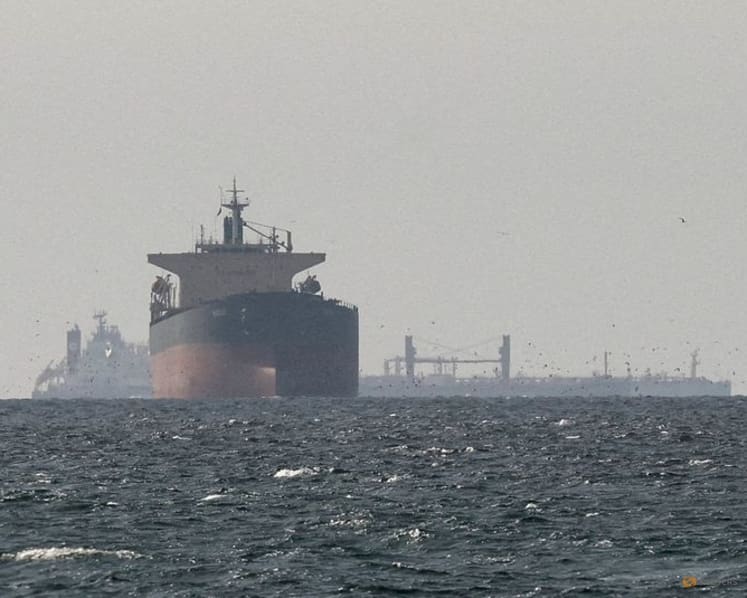
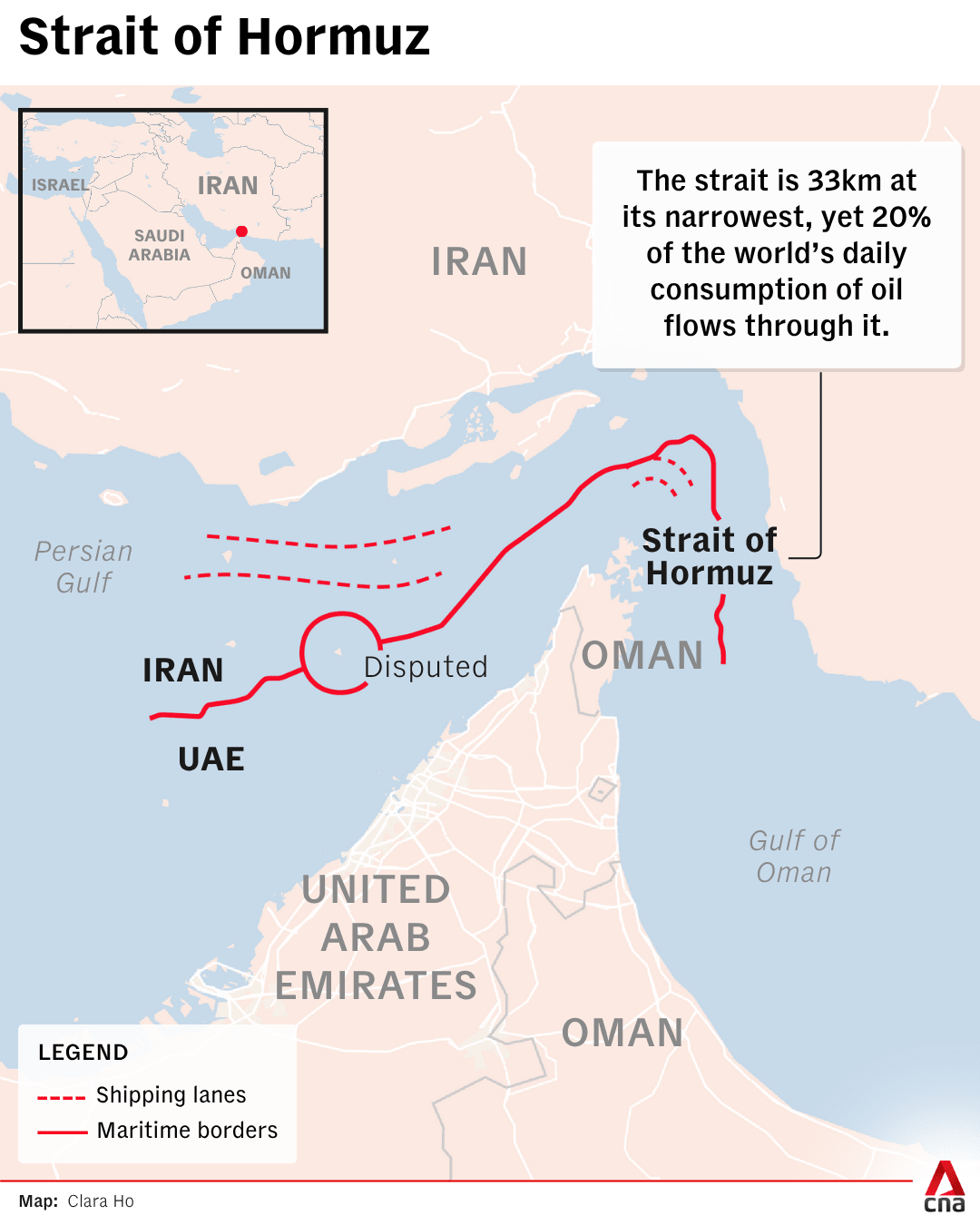
Only about 34km wide at its narrowest point between Iran and Oman, the strait connects the Gulf to the Indian Ocean. Roughly 20 per cent of the world’s oil and liquefied natural gas passes through it, along with other crucial goods.
CAN IRAN LEGALLY IMPOSE TOLLS?
Experts say the short answer is no – at least under current international law.
The Strait of Hormuz is classified as an international strait, meaning ships have a right of transit passage even though the shipping lanes fall within the territorial waters of Iran and Oman.
“Iran seeking to impose tolls … is not consistent with our understanding of the International Law of the Sea that applies to international straits, of which the Strait of Malacca and the Strait of Singapore are prominent examples,” said legal expert Donald Rothwell.
The United Nations Convention on the Law of the Sea (UNCLOS) states that nations bordering straits may not impose charges on foreign vessels simply for the right of passage.
However, fees may be applied for specific services such as piloting or port use, provided they are levied without discrimination.
While freedom of navigation applies in peacetime, the situation becomes murkier during conflict. International law states that ships flagged to neutral states should not be targeted and may continue to exercise navigational rights, but experts say legal protection is weak.
WHAT IS IRAN PROPOSING?
Even if the US-Iran ceasefire holds, Tehran has signalled that conditions in the Strait of Hormuz may not return to pre-war status quo.
Some reports suggest Iran is proposing a fee of US$1 per barrel of oil passing through. For a Very Large Crude Carrier capable of carrying 2 million barrels, that could mean up to US$2 million per transit.
Tehran has offered to split the revenue with Oman, which shares control of the strait. Muscat said it has held talks with Iran on ensuring smooth transit, but did not say if any agreements had been reached.
US President Donald Trump has also suggested a potential joint US-Iran venture to collect such tolls – a proposal that has raised alarm about the erosion of the freedom of navigation.
“This is particularly concerning,” said Rothwell, who is an international law professor at the Australian National University (ANU).
“There's been a long-standing position that international law doesn't acknowledge the imposition of tolls. Importantly, this is a principle that the US has very staunchly upheld for many decades.”
HOW WILL COUNTRIES REACT?
Analysts say any move to impose levies would likely trigger strong international pushback.
Neighbouring Gulf producers, which rely heavily on the strait for oil exports, are particularly concerned. Energy-importing countries in Europe and Asia are also wary of Iran gaining lasting control over such a vital global chokepoint.
Already, the United Arab Emirates has warned that the waterway must not be weaponised, while Greece said it would be unacceptable for ships to pay to transit the strait, cautioning that such a move would set a dangerous precedent.
WHY IS LEBANON A STICKING POINT?
Lebanon has emerged as a major flashpoint threatening the ceasefire and by extension, safe passage through the Strait of Hormuz.
Iran insists that any truce must include a halt to Israeli attacks in Lebanon, where Israel has been targeting the Iranian-backed militant group Hezbollah.
Israel, which sees weakening Hezbollah as a core military objective, argues that Lebanon is not covered by the ceasefire agreement.
Heavy Israeli bombardment on Beirut on Wednesday (Apr 8) has already put the shaky truce at risk, with Iran warning it could continue to lock down Hormuz.
WHO HAS THE UPPER HAND?
Both Tehran and Washington declared victory in the temporarily paused five-week-long conflict, but experts say nobody really wins in a war.
The US failed to achieve its goals of forcing regime change or compelling Iran to submit to its demands, despite striking hundreds of targets.
Neighbouring Gulf states bore much of the fallout, suffering infrastructure damage and economic disruption, while global markets faced soaring prices and supply chain shocks.
But Iran, though militarily weakened, may have strengthened its strategic leverage, said analysts.
“Iran, before this war, did not enjoy the same effective control over the Strait of Hormuz that it does right now. That might be a strategic accomplishment,” said H A Hellyer, senior associate fellow at the Royal United Services Institute.
WILL THE CEASEFIRE HOLD?
Analysts are divided, but agree the truce remains highly fragile.
There are signs of momentum – direct talks are expected, with Vice President JD Vance set to lead the US delegation in Pakistan this weekend.
Amin Saikal, emeritus professor of Middle Eastern, Central Asian and Islamic Studies at ANU, said sending such a high level delegation signals seriousness from Washington.
“In the past, meetings between the two sides have been indirect. Now that there's going to be direct talks, that's a good sign that both sides are serious that this process succeeds,” he said.
Still, major gaps remain, with neither side likely to accept the other’s current terms to end the conflict.
“Both sides have very strong interest in ending the war. But at the same time, (they) are arriving at negotiations with huge gaps in their demands,” Eyal Mayroz, senior lecturer of peace and conflict studies at The University of Sydney, told CNA’s Asia Now programme.
“So, the chances of a very successful round in two weeks are not looking too positive. But I think both sides will have an interest in prolonging negotiations and trying to avoid an escalation.”