analysis Asia
Can Malaysia's military move beyond words to clean its 'dirt'?
Analysts call for tougher punishment for misconduct and parliamentary oversight for large arms purchases following recent scandals in the armed forces.
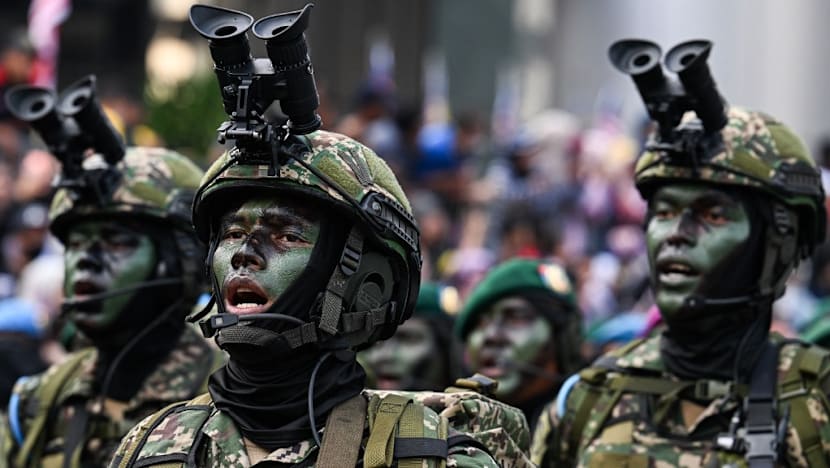
Members of the Malaysian Armed Forces march during the country's National Day parade in Kuala Lumpur on Aug 31, 2022. (Photo: AFP/Mohd Rasfan)

This audio is generated by an AI tool.

KUALA LUMPUR: The Malaysian Armed Forces (MAF), rocked by a spate of scandals that sparked a public rebuke by the defence minister, faces a moment of reckoning: Whether it can clean up its act.
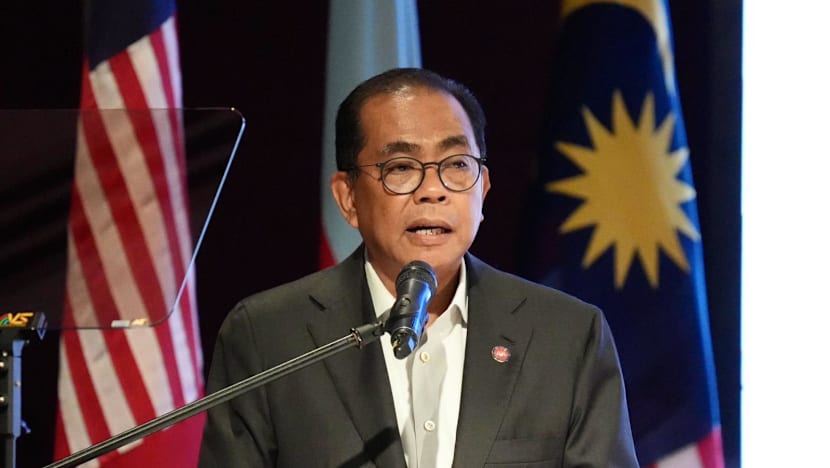
In a fiery speech on Monday (Jan 12), Defence Minister Khaled Nordin vowed to overhaul anti-corruption measures and review how procurement is done in his ministry and the MAF.
He also warned that personnel involved in “immoral activities” - in light of allegations of misconduct at military camps across the country - will be "disgracefully dismissed”.
All eyes will now be on whether these words can translate to lasting reforms that will rid the MAF of misbehaviour and corruption – issues that analysts say have been around for years.





Potential reforms include tougher punishment for misconduct and parliamentary oversight for large arms purchases, they suggest, while internal whistleblowers should be firmly protected to ensure higher-ranked personnel can be investigated effectively.
"Basically, a strongly-worded speech will not change anything unless institutional reforms are implemented," defence analyst Lam Choong Wah of Universiti Malaya told CNA.
CORRUPTION: MACC EXPANDING REVIEW
On Jan 7, anti-graft authorities detained a former army chief and four others in an investigation into alleged bribery involving military procurement contracts, after raiding several firms said to have repeatedly secured high-value contracts.
The Malaysian Anti-Corruption Commission (MACC) also said on Tuesday that it has expanded its graft probe of MAF to a comprehensive review of the Ministry of Defence’s (MINDEF) procedures and systems.
MACC chief Azam Baki confirmed the sheer scale of the investigation, based on the ranks of service members involved, news agency Bernama reported.
“We cannot only look at the case that is currently being investigated, but also (need to look at) several other issues that may have existed in MINDEF for a long time,” Azam said.
Corruption in the MAF is “not a new thing”, Lam said, citing the littoral combat ship (LCS) scandal as an example. “It happens and is well known by all concerned parties,” he asserted.
The LCS scandal refers to a RM9.14 billion (US$2.06 billion) contract to construct six ships awarded by the Ministry of Defence to Boustead Naval Shipyard Sdn Bhd through direct negotiation. The contract was reportedly awarded in 2011 and took effect in October 2013.
The Malaysian government paid RM6.08 billion or two-thirds of the cost and five of the ships should have been handed over to the navy by August 2022, but none has been delivered.
Former navy chief Ahmad Ramli Nor, who was former managing director of Boustead Naval Shipyard, was charged with criminal breach of trust in the case. In March last year, he was granted a discharge not amounting to an acquittal after a judge found he was unfit for trial.
More recently, Malaysia king Sultan Ibrahim Sultan Iskandar ordered the defence ministry last August to scrap its plan to procure Black Hawk helicopters that were over 30 years old, likening them to “flying coffins”. He also called out “agents” and “salesmen” at the ministry, warning them not to “fool” him and “repeat past mistakes” in procurement.
Following the king's remarks, Khaled said his ministry would ensure the modernisation of Malaysia's defence assets would be in line with the needs of its armed forces.
MINDEF eventually abandoned plans to buy the helicopters to “take heed” of Sultan Ibrahim’s concerns, MAF chief General Mohd Nizam Jaffar said.


Since the king’s comments were an “ad hoc royal decree” instead of institutional reforms initiated by MINDEF, Lam believes “nothing has changed” since then.
“The latest corruption got exposed because of a whistleblower, not because of internal checks and balances,” Lam noted.
In a rare statement after meeting the newly appointed army chief on Jan 7, Sultan Ibrahim said corruption remains the “biggest enemy” to the MAF’s strength and credibility.
“I also hope that the army will continue to earn the public’s respect and confidence as a professional institution free from corruption,” he said, again criticising the role of “agents” or “middlemen” in MINDEF.
Khaled, who assumed his post in December 2023, said on Monday his ministry will use artificial intelligence (AI) in the procurement process, to help track budget allocations and determine the “true cost” of military assets.
Lam, however, proposed more checks and balances, saying the MAF has lacked oversight “for a long time”.
“I would like to suggest that every arms procurement which exceeds RM100 million should be audited by the National Audit Department and scrutinised by parliament’s Special Select Committee on Security,” he said.
Defence procurement in Malaysia is known to be opaque, with negotiations shrouded in secrecy under the cover of national security.
“These recurring cases point to systemic risks arising from excessive secrecy and weak oversight within institutions entrusted with national security,” Transparency International Malaysia said in a statement after the graft probe was announced.
MISCONDUCT: WHISTLEBLOWER PROTECTION URGED
Khaled also took aim at viral videos allegedly showing service members engaging in immoral activities in military camps. Some of these clips purportedly showed individuals seated at a bar and a man engaging in inappropriate behaviour with a woman.
The minister stressed that such activities – part of what has been described as a “yeye” or entertainment culture – have always been prohibited, and that no woman should be treated “as a sex object” on camp grounds.
On Monday, Khaled said the investigation into 21 Royal Malaysian Air Force personnel would advance to legal proceedings soon.

Salawati Mat Basir, a legal adviser at Universiti Kebangsaan Malaysia, told CNA that whistleblowers are crucial in investigating such cases.
“If there is a witness who can say who is the young officer involved in the bullying, who needed to pay for the liquor, who needed to find women for the senior officers, then we can still remedy it,” she said.
Salawati, who is also a maritime affairs expert, acknowledged that rank-and-file personnel fear reporting their superiors for such indiscretions, because of their low salaries and the need to support their families.
“We need to show the public that we can punish these people,” she said, calling for tougher penalties for misconduct.
“If MINDEF really wants to clean all this dirt, they must do it. If they just say it and they do it half-heartedly, we're not going to see any changes.”
Khaled on Monday said his ministry will set up an Integrity and Trust Board - a “trusted” channel to investigate and respond to internal feedback or concerns in the MAF.
“This board should be formed in a way that no intervention from important people can occur,” he said, adding that it will be led by a figure who is “independent and experienced in good governance”.
A former senior navy officer told CNA that “yeye” culture is present only to a certain extent, but that without punitive measures, enforcement of military discipline is "futile".
“The minister's directive to punish and disgracefully dismiss those involved sounds more rhetoric than real,” he said on the condition of anonymity.
“To move forward, concrete actions beyond rhetoric are critical.”
MOVING FROM “FRUSTRATION” TO OUTCOMES
Analysts said Khaled’s speech was a sign of frustration with the recent scandals, and the scale and severity of these episodes meant a public response was necessary.
“A muted or purely administrative response risked being interpreted as avoidance, particularly as questions centred on governance and senior responsibility rather than low-level misconduct alone,” said Jamil Ghani, a doctoral candidate at Singapore's S Rajaratnam School of International Studies.
While Jamil said the speech is likely to increase pressure on senior commanders and administrators, particularly in areas linked to procurement and base management, there is no guarantee of reform.
“Any improvements will depend on whether enforcement and oversight continue once public attention subsides,” he said.


Khaled’s pledge of sweeping reforms is in line with Prime Minister Anwar Ibrahim’s anti-corruption agenda. Anwar has repeatedly declared the MACC is free to investigate anyone in his administration without fear or favour.
But analysts downplayed any notions that the premier himself could have intervened in response to the MAF scandals.
Jamil said there seems to be a division of roles: Political backing for enforcement at the top, operational investigation by MACC, and sector-specific responses handled by the defence minister.
“Whether this ultimately strengthens the prime minister’s anti-graft agenda will depend on outcomes,” he said.
Salawati said there was “no need” for Anwar to get involved, as Khaled would have had an “idea” of the scandals that were taking place but did not initially have the full details.
“Now that he knows, he proceeded to give that speech,” she said.
Government spokesperson Fahmi Fadzil said on Wednesday that Khaled had presented a plan at a Cabinet meeting to reform his ministry and eradicate corruption, and it was "well-received".
The former senior navy officer believes the most “significant signal” to have come out of Khaled’s speech is the MACC's system-wide investigation into MINDEF’s procedures.
This move from "punishing individuals to fixing broken systems" is essential for lasting change, he said.
“The credibility of these reforms hinges on consistent, transparent enforcement, especially against high-ranking individuals. The nation will judge this commitment by the results.”