analysis East Asia
Iran is set to dominate Trump-Xi summit. What else is at stake, and who has the upper hand?
Analysts say expectations for any meaningful reset in Sino-US ties remain tempered - and that the real test will be whether the summit between Chinese President Xi Jinping and US counterpart Donald Trump in Beijing produces durable mechanisms.

This audio is generated by an AI tool.


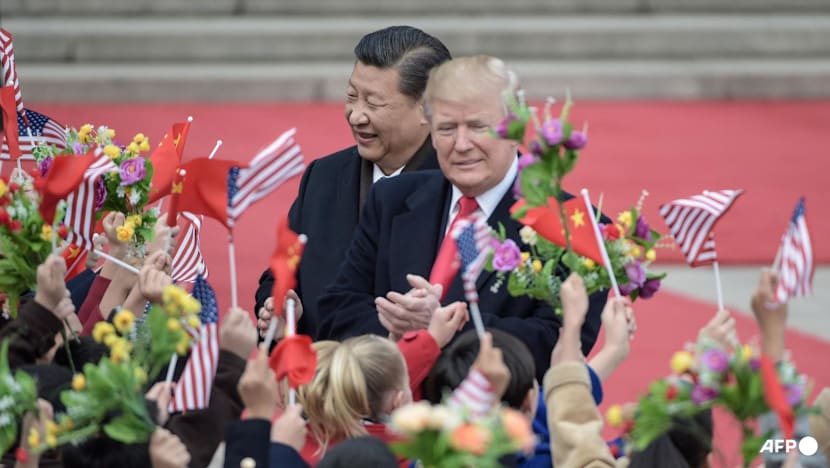
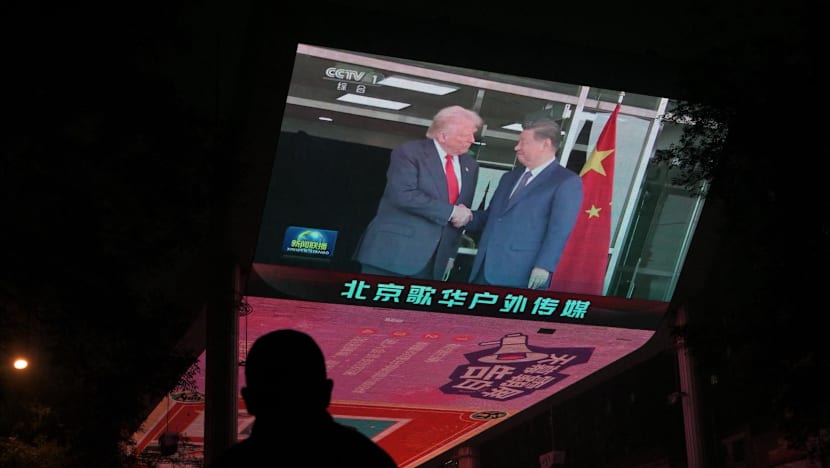
BEIJING: The Iran war will dominate the agenda for the summit between Chinese President Xi Jinping and United States counterpart Donald Trump in Beijing this week, in an early test of how far Washington and Beijing can cooperate despite deepening strategic rivalry, say analysts.
Yet even as the crisis that has disrupted global energy security injects urgency into the meeting, Taiwan will also feature prominently in the talks as it remains the enduring fault line in the Sino-US relationship, observers say.
They add that the issues could even converge at the negotiating table as both sides test whether progress on one front could yield leverage on the other, although the likelihood of formal trade-offs is limited.
But even as these and other thorny issues - such as technology restrictions and trade frictions - are set to come up, analysts say expectations for any meaningful reset in Sino-US ties remain tempered.





“The optics will be dramatic … (but) there does not appear to be much that either the US or PRC (People’s Republic of China) are able and willing to deliver - and then stick to those positions,” said Chong Ja Ian, an associate professor from the National University of Singapore (NUS) and non-resident scholar at Carnegie China.
THE WEIGHT OF WAR
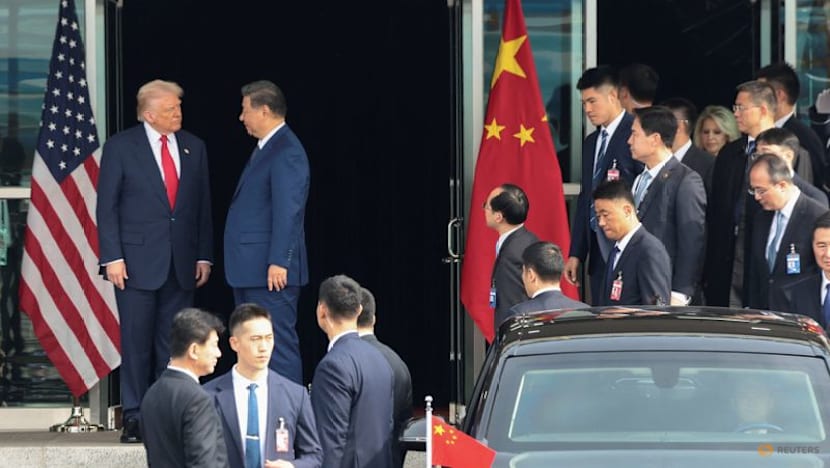
Beijing confirmed on Monday (May 11) that Trump would visit China from May 13 to 15 at Xi’s invitation, marking his first state visit to the country since 2017.
US officials have said he is scheduled to arrive in Beijing on Wednesday night, with summit talks slated for Thursday and Friday.
Analysts said the war in the Middle East is set to carry significant weight at the summit.
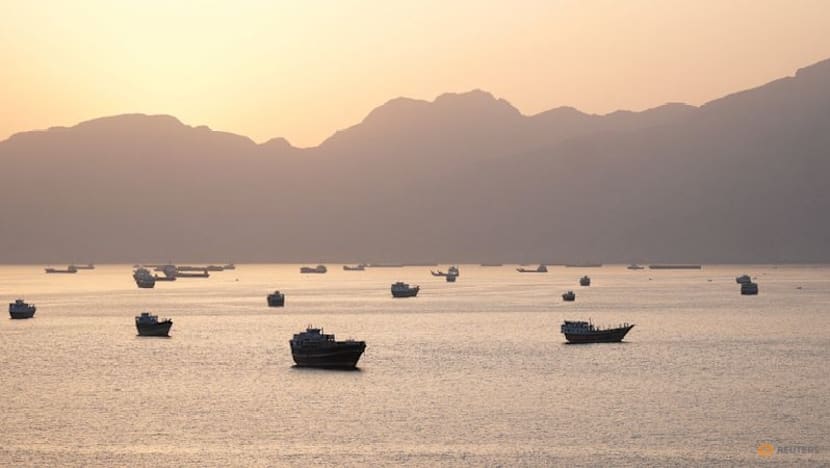
Triggered by US and Israeli attacks on Iran, the conflict that’s now in its third month has disrupted shipping traffic through the Strait of Hormuz, a critical maritime artery that carries about a fifth of the world’s oil and gas supplies.
“It is no longer just a Middle East issue but is spilling over into global energy security, maritime routes and US-China strategic competition,” Sun Chenghao, a senior fellow at the Center for International Security and Strategy at Tsinghua University, told CNA.
Pointing to China’s heavier reliance on Middle Eastern energy supplies, Sun added that the US is seeking to leverage this to exert diplomatic pressure on Beijing. The Trump administration has publicly pressed China to use its influence with Tehran to help reopen the waterway and stabilise energy flows.
Roughly 40 to 50 per cent of China’s oil imports are estimated to transit the Strait of Hormuz, compared with about 7 per cent of US crude oil and condensate imports in 2024, according to energy-market estimates and US Energy Information Administration data.
Both sides share an interest in preventing a prolonged closure of the strait or a broader regional escalation that could destabilise global markets, Sun said.
“The limitation, however, is that their fundamental positions differ: the US emphasises ‘maximum pressure’ and deterrence, while China stresses political solutions and opposes unilateral sanctions,” he said.
The Iran crisis also exposes sharply different priorities for Washington and Beijing heading into the summit, analysts said.
Beijing is seeking to avoid disruption to energy flows while maintaining ties with Tehran, said Li Yaqi, a research assistant specialising in international relations at the S Rajaratnam School of International Studies (RSIS) in Singapore, told CNA.
Washington, by contrast, is looking for visible movement from Beijing that could help contain the conflict and ease pressure on global energy markets - giving Trump a deliverable he can frame as a test of crisis management, Li said.
“For Trump, Iran is the deliverable … for Beijing, Iran is a complication,” Li told CNA.
TUSSLING OVER TAIWAN
Analysts also expect Taiwan to loom large, with Beijing having already signalled ahead of the meeting that the issue remains central to its dealings with Washington.
China regards Taiwan as its territory and has not ruled out the use of force to bring the island under its control.
In an Apr 30 phone call with US Secretary of State Marco Rubio, China’s top diplomat Wang Yi said the Taiwan question concerns China’s core interests and is the “biggest risk” in China-US relations, according to the Chinese readout.
While the US does not formally recognise Taiwan diplomatically, it is the island’s key international backer and is bound under the Taiwan Relations Act to provide Taipei with the means to defend itself.
Rubio said on May 5 that he was “sure Taiwan will be a topic of conversation” at the summit, adding that both Washington and Beijing understood each other’s positions and did not want destabilising events in the Indo-Pacific.
Analysts said Trump’s transactional approach to diplomacy has fuelled speculation that Taiwan could become entangled in broader bargaining between Washington and Beijing over Iran or other areas of cooperation, although any explicit trade-off remains unlikely.
Tsinghua University’s Sun said the risk of Taiwan and Iran becoming linked in summit negotiations “objectively exists”, but suggested this was more likely to emerge through subtle bargaining and diplomatic signalling rather than any formal deal.
“It would be very difficult for the US to genuinely ‘trade away’ Taiwan for limited cooperation on Iran,” Sun said, noting that Taiwan remains a core sensitivity for Beijing while longstanding US legal, political and security commitments constrain Washington’s room for manoeuvre.
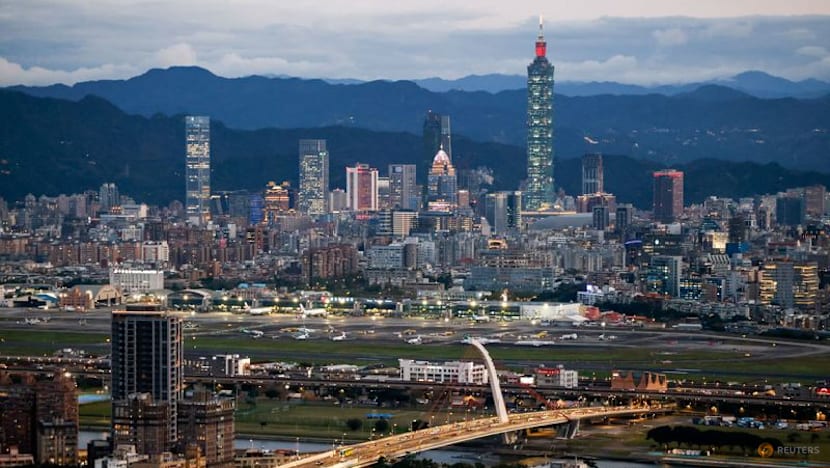
While Trump could still attempt to do so, Chong from NUS said any such move would likely run into resistance from Congress and the broader US policy establishment.
“Trump likely also does not want to be known as the ‘President who lost Taiwan’,” he added.
Jonathan Ping, an associate professor at Bond University in Australia, offered a similar reading, saying a direct Taiwan-for-Iran exchange remained unlikely despite Trump’s transactional instincts.
Taiwan remains a core US interest, with congressional opinion, alliance commitments and strategic logic all constraining any trade, he said.
“The more plausible scenario is one of vague and informal signals,” Ping told CNA.
That could involve some degree of US restraint on Taiwan in return for Chinese assistance on Iran, rather than any formal linkage, he added.
“Formal linkage would dangerously undermine deterrence and invite future exploitation,” Ping said.
Li from RSIS said the more realistic scenario is what he called “cumulative accommodation through ambiguity” - where small shifts in timing, language or signalling could add up to a perception of US flexibility on Taiwan.
Such shifts could include delayed arms sales, softer language, weaker signalling or indirect pressure on Taiwan’s defence capacity, he added.
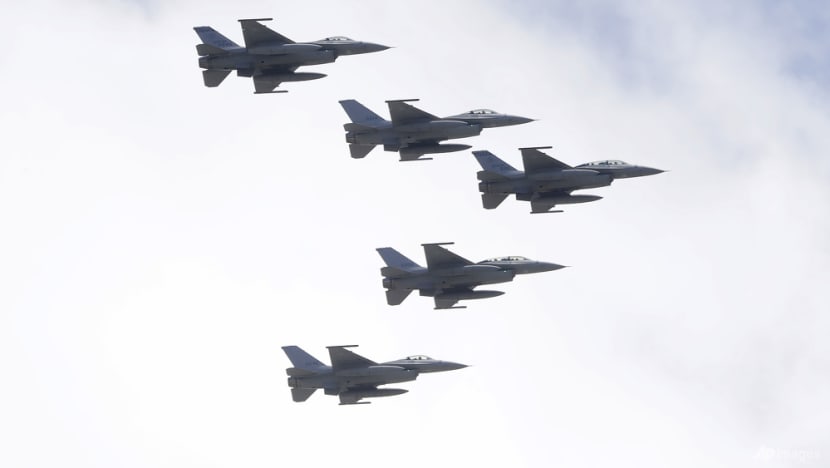
“Beijing does not need Trump to announce a Taiwan concession. It only needs language and sequencing that it can later cite as evidence of US accommodation on China’s ‘core interests’,” Li said.
TRADE AND TECHNOLOGY
Beyond Taiwan and Iran, the summit agenda is also likely to be shaped by broader disputes over trade, technology and security, analysts noted.
Tariff tensions between the world’s two largest economies have eased somewhat since both sides agreed to a tactical truce last year, but deep disagreements over export controls, industrial policy and market access remain unresolved.
US officials have proposed a US-China “Board of Trade” and flagged discussions about a possible bilateral “Board of Investment”. Analysts have told CNA how it signals a deeper shift in Washington’s approach - from pushing for structural reforms in China’s economy to negotiating the terms of trade.
Agricultural purchases may also feature, said NUS’ Chong, although these are likely to matter more to Trump’s domestic political messaging ahead of the midterm elections in November than to broader US strategic interests.
In terms of technology, artificial intelligence (AI) and its associated risks are expected to be brought up.
In Monday’s briefing, US officials said there was increasing concern about advanced AI models being developed in China, and suggested possible discussion on "a channel of communication" to avoid conflicts arising from their use.
THE BALANCE OF LEVERAGE
Across the summit agenda, analysts said leverage is likely to be fragmented rather than clearly tilted towards either side, with advantages shifting across Iran, Taiwan and technology-security issues.
On Iran, Beijing may have the stronger hand because Trump has more need for a visible outcome, said RSIS’ Li.
After weeks of conflict and pressure on global energy markets, any sign that Washington can draw Beijing into crisis management would allow Trump to present the summit as evidence of strength and diplomatic control, he added.
Beijing’s main priority, by contrast, is to prevent the Iran conflict from becoming a destabilising complication, Li asserted.
“The asymmetry of need favours the side that can afford to care less,” Li added.
On Taiwan, however, experts said the dynamics are more complex.
Li said Beijing has already benefited from what he described as Washington’s caution on Taiwan ahead of the summit, citing in particular the reported delay of a major US arms sale package to the island.
The New York Times reported in late February that the Trump administration had delayed a multibillion-dollar arms package for Taiwan to avoid complicating the Beijing summit, citing unidentified US officials.
The package had stalled at the State Department after senior lawmakers approved the plan in January, the report said.
There has been no formal US announcement confirming such a delay, though Taiwan’s Defence Minister Wellington Koo said in March that Taipei had received a letter of guarantee from Washington and that the next arms package remained on track.
Li said Congress and the broader US policy establishment remain key constraints on how far Trump can shift US policy on Taiwan.
That, in turn, gives Trump a bargaining position of his own, allowing him to present himself to Beijing as someone able to shape the tone and timing of US pressure on Taiwan, while warning that congressional and institutional momentum behind tougher measures would be harder to contain if China escalates, he added.
Chong from NUS said neither side appears to hold a clear overall advantage.
“That may be why expectations for a major breakthrough or change following the summit are low,” he said.
Even if Trump and Xi produce surprises, both leaders may have limited room to manoeuvre, Chong added, pointing to earlier recriminations and walkbacks after the Phase 1 trade deal was signed in January 2020 during Trump’s first term.
That episode, he suggested, remains a cautionary example of how summit-level deals can unravel once both sides return to domestic pressures and contested interpretations of what was agreed.
Chong highlighted how some observers may see Beijing as having gained leverage after its rare earth restrictions helped elicit a climbdown by Trump on tariffs.
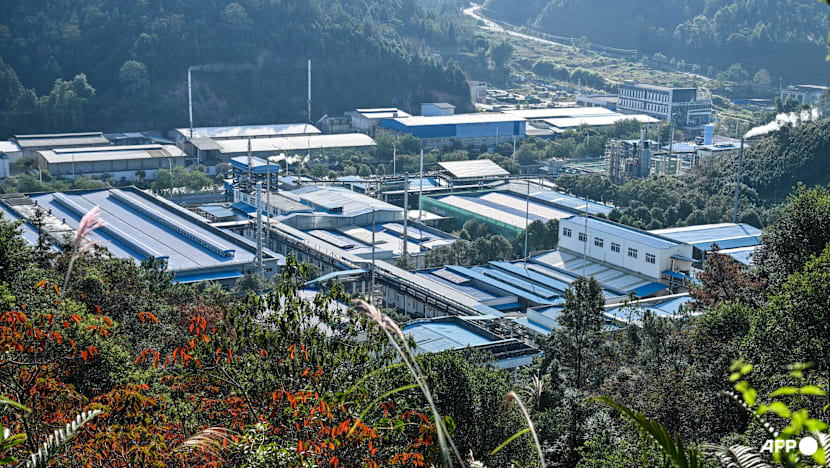
At their last face-to-face meeting in Busan, South Korea, in October last year, Trump and Xi agreed to a trade truce that included easing US tariff pressure and pausing China’s rare earth export curbs, while Beijing committed to resume major purchases of US agricultural products.
“Should he be better prepared this time, he may realise that he does not have a clear advantage,” Chong said of Trump.
“Likewise for Xi, after getting a US climbdown on the most extensive asks, the PRC made little other headway. Instead, both Washington and Beijing continued to test each other.”
Li from RSIS said that while Beijing does have leverage in rare earths, Washington holds important structural advantages in other areas such as frontier AI, advanced semiconductors, financial-system access and the ability to coordinate restrictions with allies.
“(China’s leverage in rare earths) can create short-term disruption, especially if Washington is unprepared, but it is not a permanent substitute for US advantages in high-end compute, equipment and financial infrastructure,” Li said.
SYMBOLISM OR SUBSTANCE?
Analysts said the summit’s real test will be whether it produces durable mechanisms that can endure future crises - or simply another round of leader-level theatre.
Li said the summit would become consequential only if it leaves behind “machinery that can survive the next shock”.
That could mean a confirmed follow-on schedule, revived military-to-military channels specifying “who talks to whom, how often and at what level”, or formalised talks on AI safety and technology-security risks, he said.
“If not, the summit is mostly theatre,” Li said.
Ping from Bond University said the most meaningful signs to watch for would be concrete cooperation on Iran, such as enforcement of oil sanctions, progress on reopening the Strait of Hormuz or coordinated diplomatic pressure.
Other indicators would include pauses in tariff escalation or technology export restrictions, restraint in language on Taiwan, or joint statements on AI and strategic stability, Ping said.
“Deeper coordination would be evidenced by verifiable deliverables,” he said.
Sun from Tsinghua University said the summit is more likely to point to “managed competition” than any fundamental transformation of ties.
Both sides recognise that a return to the previous era of engagement is no longer possible, but neither wants competition to spiral out of control, he said.
The most realistic outcomes, he added, would include additional crisis communication mechanisms, restored high-level exchanges and limited coordination on energy security and regional stability.
“In other words, the two sides are unlikely to move toward full confrontation, but equally unlikely to return to stable, traditional cooperation.”