Southeast Asian countries brace for elections, test of public trust and economic uncertainties in 2026
Southeast Asia faces a complex 2026, with a snap election in Thailand, conflict between two neighbours, possible state-level contests in Malaysia, and Indonesia managing reconstruction in Sumatra and other programmes.
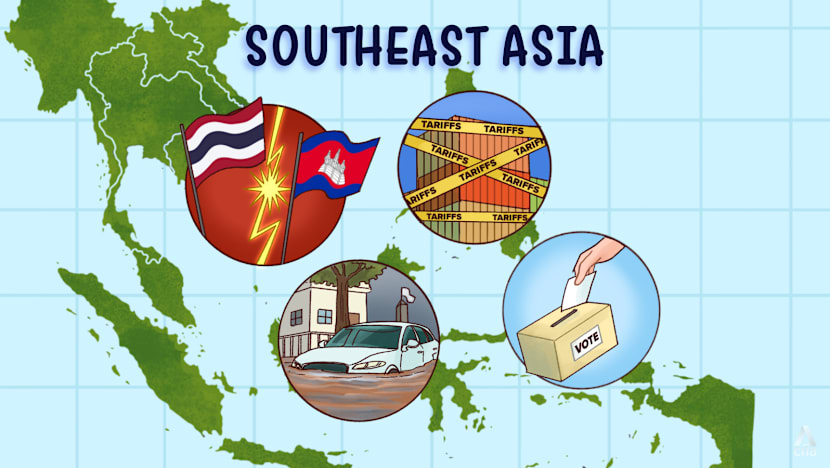
From electoral trials to trade volatility, Southeast Asian nations must weather a complex landscape of political and economic uncertainty throughout 2026, say analysts. (Illustration: CNA/Clara Ho)

This audio is generated by an AI tool.






BANGKOK/KUALA LUMPUR/JAKARTA: Southeast Asian governments will have to tackle economic anxiety as well as simmering geopolitical tensions in the coming year, with some countries in the region set for greater domestic instability amid growing scepticism about whether politics is able to resolve those challenges, experts say.
Governments will aim to maintain economic growth in the face of continued global headwinds and rising costs from United States tariffs as well as trade volatility.
The year began with Myanmar’s junta holding a phased election viewed by some in the international community as largely symbolic, given that key opposition parties have forgoed participation.
Voting started on Dec 28, 2025 in 102 townships and will continue on Jan 11 in 100 townships, and Jan 25 in 63 townships, covering a total of 265 townships out of a total of 330, Reuters reported.
Some analysts view the election as a way for the military to entrench its rule via proxies, and earn some degree of stability and legitimacy at home and abroad.
This will be followed by Thailand’s general election on Feb 8. Thais will be voting against a backdrop of ongoing border tensions and fighting with Cambodia, rising nationalism and an economy that many voters feel is no longer delivering, observers say.
In Malaysia, the year ahead politically is shaping up as an extended electoral trial, with state polls set to probe the durability of Prime Minister Anwar Ibrahim’s fragile unity government and expose unresolved tensions among coalition partners.
In Indonesia, President Prabowo Subianto faces a test of public trust after crisis management challenges and economic obstacles dented early optimism about his leadership, the analysts add.

THAILAND: SNAP POLLS AND SCAM HEADACHES
Thailand is going to the polls early after a makeshift government, formed amid the collapse of the previous administration, ran aground in early December.
Prime Minister Anutin Charnvirakul dissolved his government less than 100 days into office. His ascension was the result of a fragile parliamentary agreement with the national opposition.
When that deal fell apart and a vote of no-confidence was threatened, he moved to hold an election within 60 days.
He had taken power following the dismissal of previous prime ministers Srettha Thavisin in August 2024 and Paetongtarn Shinawatra in August 2025, both by Thailand’s Constitutional Court.
Now, Anutin, the head of the centre-right Bhumjaithai party, is spearheading efforts to elevate his party over the next term and be returned as prime minister.
The People’s Party and Pheu Thai Party are expected to be the other main contenders in the election.
A previous incarnation of People's Party won the last election in 2023 on an anti-establishment platform but was blocked from power by lawmakers allied with the royalist military.
Pheu Thai, on the other hand, is a populist party founded by Thailand's former leader Thaksin Shinawatra, Paetongtarn’s father.
The national mood, as a result of the formation and collapse of political coalitions, is one of fatigue and frustration, said Suranand Vejjajiva, a political analyst and former minister in Thaksin’s government.
“People are tired of the political game. They want to see a real political party which can propose long-term policies,” said Suranand.
Rome Rangsiman, a member of Thailand's House of Representatives and the deputy leader of the People's Party, the national opposition, agreed.
“I think for Thai people, they feel very mixed. They feel bored with the situation, but they also expect change,” he told CNA.
Suranand said that the instability over the past few years has resulted in an inability for the country to make the big structural reforms that the country needs, something that cannot be solved by populist policies.
“Things like the environment, climate change and the changes in geopolitics, which of course, need long-term vision. And the economic hardship, the gap between the rich and the poor, is high as in any other country,” he said.
“These issues need to be focused on and stressed by the new government, which, if there is no stability in terms of a coalition government, will not be addressed.”
Broad expectations are that the election will again result in a wide spectrum of parties winning seats without gaining a majority.
However, the issues that may resonate with voters this year are expected to be less symbolic and more pragmatic than during the last election in 2023, said Stithorn Thananithichot, a senior research associate at King Prajadhipok's Institute at Chulalongkorn University.
It means the parties are scrambling to secure their own bases and win over the undecided, a bloc which according to an opinion poll published by the National Institute of Development Administration in early December makes up a third of voters.
Voter camps and ideological lines are less clear than before. This time, Stithorn said, Thai voters are emotionally polarised but electorally flexible.
Someone may feel deeply nationalist yet still vote for a reformist party, or support democracy but prioritise security or stability, especially given the ongoing conflict with Cambodia.
“It’s all mixed. There is no focus point or policy that people pay attention to. The divisions have become deeper than the past election, but not wider,” he said.
“The feeling to change, to reform, is still there, but nationalism is also lighting up, and many people are still thinking about some kind of pragmatic policy that can make their well-being better too."
For analysts, it makes the election likely to be more volatile and its outcomes harder to predict.
“Last time, it's much easier, because it's a fight between parties that claimed to be a democratic force and those (who represented) remnants of the coup d'etat (in 2014). But now it's opened up,” Suranand said.
The border conflict with Cambodia, which erupted significantly in July before a shaky ceasefire was agreed with the beckoning of US President Donald Trump and Anwar, will remain in the minds of both voters and politicians, said Stithorn.
He does not expect fighting to be raging, as it has at times through December, as the election gets closer with Anutin keen to show he can manage the situation.
“If you cannot temporarily stop the violence between the two countries, it shows low performance of your Cabinet to control the situation,” he said.
On Saturday (Dec 27), the governments agreed to cease fire, freeze troop movements, allow impacted civilians to return home as soon as possible and cooperate on demining efforts and combatting cybercrime.
Thai officials and lawmakers have increasingly framed regional scamming networks as a national security concern, with enforcement heavily dependent on regional cooperation. In public debate, scams have increasingly become politically linked to border security.
Thailand has been aggressively targeting scam operations close to its border, claiming that large compounds and casinos in Cambodian border towns are hubs for online fraud operations that target people globally.
The military has described parts of its border operations as a “war against the scam army,” and the issue has intertwined to intensify mistrust between the two governments, justify certain military actions and affect cross-border cooperation.
For Rome of People’s Party, the clashes have a root cause in the scamming networks that have widely proliferated in Cambodia. That issue is hurting Thais’ feelings of security and their bank account balances, he said.
The opposition is shaking off accusations it is anti-military and as it enters campaigning, is promoting a message that its border policies and anti-corruption drive can reap results.
The People’s Party has made anti-scamming enforcement part of its platform, while arguing that transnational crime syndicates are linked to the broader problems at the border.
“The clashes are not (only creating refugees), they make Thai people feel like they don't have money anymore and they don't feel safe to be living in this system,” Rome said.
A Global Anti-Scam Alliance report in 2025 found that 72 per cent Thais have fallen victim to scams, with total annual losses now reaching about US$3.7 billion.
“Thailand right now, we are on the front line. This is not just the armed conflict, but we are the front line to combatting the scam network,” Rome said.
He warned that large amounts of grey money were flowing from Cambodia into Thailand, much of it linked to scam and criminal networks, and that there were reports this money was being used to try to influence or take control of important Thai financial institutions and energy companies — a threat he described as “very serious”.
Any future government will have to better address this issue concurrently with the border tensions, Suranand said.
“It’s an underlying threat, the money laundering, the help in terms of transferring those funds into gold or crypto or whatever is done in Thailand, and there's a lot of people who are now accused of being involved,” he said.
For their part, Anutin and Bhumjaithai have taken a tough, sovereignty-focused tone towards the Cambodia border dispute, emphasising national defence and protection of Thai citizens.
Anutin has promised to build a wall along the Thai-Cambodian border if Bhumjaithai retains administrative power after the general election, according to Thai media reports.
The role of the military in national affairs is a constant factor in Thailand. There have been more than a dozen coups in Thailand’s modern history, the latest in 2014 when General Prayut Chan-o-cha overthrew the government of Yingluck Shinawatra and installed a military junta.
Analysts agreed that Thailand’s democratic systems and foundations remain somewhat shaky heading into 2026. With political uncertainty lingering, even modest continuity is increasingly seen as success.
“I don't expect high-quality democracy, but just stability of democracy is enough and no non-democratic power intervening,” said Stithorn.
“I think that that is enough to judge the progress of Thailand’s democracy.”

MALAYSIA: TEST OF POLITICAL RELATIONSHIPS
The political temperature in neighbouring Malaysia is also set to rise in 2026 with elections expected in several states. While Melaka, Johor and Sarawak are not officially due to hold elections until early 2027, analysts widely expect these polls to be held ahead of schedule.
These state-level contests are viewed as a prelude to the 16th General Election (GE16), which must be called by February 2028.
Analysts told CNA that the state polls in Melaka and Johor, especially, will serve as a critical test for the unity government's coalition dynamics.
These elections are expected to highlight the delicate balance between federal cooperation and the need for individual parties to maintain their own political identities, they said.
Ahmad Fauzi Abdul Hamid, a political science professor at Universiti Sains Malaysia (USM), told CNA it is very likely the three state polls will be held this year.
“The state polls will be seen as an early indicator of how the Pakatan Harapan (PH) and Barisan Nasional (BN) coalition fares and show the government the level of support they have,” Ahmad Fauzi said of the two coalitions that have historically been rivals but are in a partnership following the results of the 15th general election in 2022 that saw a hung parliament.
Ahmad Fauzi said that the Melaka and Johor polls will indicate if PH and BN could work together in GE16.
This is especially as there is bad blood between BN’s United Malays National Organisation (UMNO) and PH’s Democratic Action Party (DAP) following recent court rulings involving former prime minister and former UMNO president Najib Razak.
A DAP lawmaker purportedly “celebrated” the High Court ruling denying Najib house arrest, which offended UMNO politicians.
“If BN and PH are really going to collaborate, they would have to demonstrate unity, starting with the state polls,” said Ahmad Fauzi.
But Ahmad Fauzi downplayed rumours of a 2026 snap general election, arguing that the incumbent government will want to maintain its current mandate for as long as possible.
Anwar himself ruled out a 2026 general election last month, saying reforms and addressing the rising cost of living were his priorities.
Political scientist Syaza Syukri of the International Islamic University Malaysia told CNA that as parties look ahead to GE16, a period of “managed distance” was to be anticipated.
“I think this is the correction in the sense that each party is going to set its own narrative on where it stands within their coalition and larger Malaysian politics. This is part of the theatre to win over electoral support,” she said.
“But I see it as managed because I don’t see any party seriously challenging its allies especially now that Malaysian politics is so fragmented.”
Syaza believes UMNO could ramp up its pro-Malay rhetoric while DAP would push for reforms that urban voters want but would have to accept “moderate” reforms.
In opposition coalition Perikatan Nasional (PN), cracks are widening between partners Parti Islam Se-Malaysia (PAS) and Parti Pribumi Bersatu Malaysia (Bersatu).
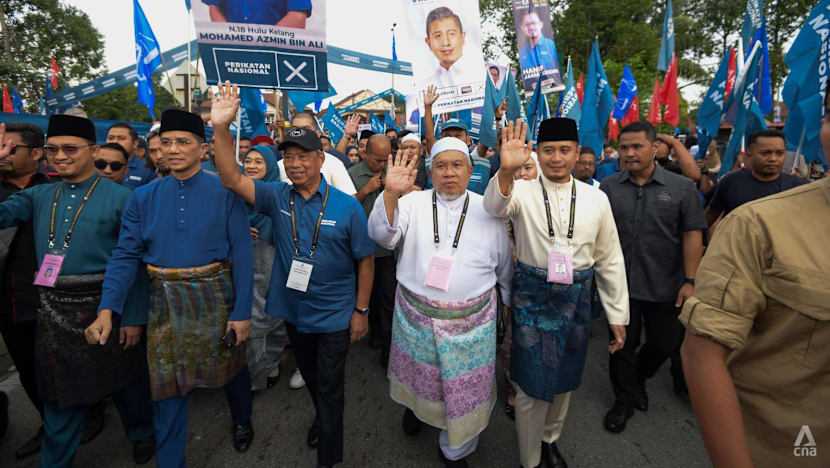
Perlis Chief Minister Mohd Shukri Ramli of PAS resigned on Dec 25 after losing the support of PN state assemblymen. Shukri was replaced by Bersatu’s Abu Bakar Hamzah amid accusations by some PAS members of “backstabbing” by Bersatu.
PN was further shaken by chairman Muhyiddin Yassin’s resignation effective Jan 1.
After Bersatu president Muhyiddin’s announcement on Dec 30, PAS secretary-general Takiyuddin Hassan signalled PAS’ “readiness” to lead PN “for the purpose of strengthening the coalition and its preparations in facing the state elections and the 16th General Election”.


The developments mark a major fracturing and it is not certain if PN will survive it, said Syaza.
“Even if it does, I think it would really be a strategic electoral coalition – (for) seat distributions, for example – unless they can find someone who can bring both sides together,” she said. “But there might be bad feelings and distrust now.”
If PAS becomes the leader in PN, it would stick to the pro-Malay-Islam script, Syaza said.
Should PAS break up with Bersatu, it could “go hard on its Islamist messaging”, she said. “Bersatu was supposed to be that bridge in PN (to moderate and non-Malay voters).”
Ahmad Fauzi added that the government and opposition each have issues to resolve, especially when it comes to internal unity.
“It will be a test for both sides to see if they can maintain their present form or if new political realignments will emerge.”
INDONESIA: TEST OF PUBLIC TRUST
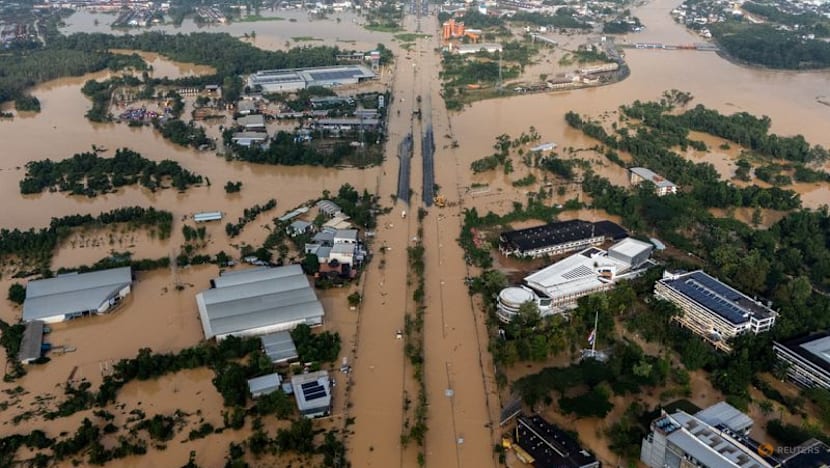
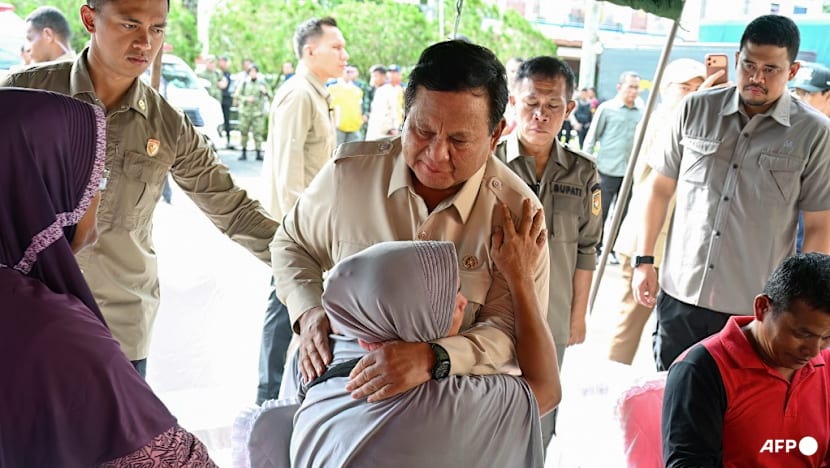
Still in the first half of his five-year term that began in October 2024, Indonesia President Prabowo can expect a politically difficult year as his popularity faces pressure following the government’s handling of the Sumatra disaster that killed more than 1,100 people and displaced at least one million across Aceh, North Sumatra and West Sumatra between Nov 25 and Nov 30, said analysts.
Environmental and legal experts have said deforestation – both legal and illegal – worsened the Sumatra floods and landslides.
People were shocked not only by the scale of the disaster, but also by controversial statements and overoptimistic claims from senior officials, which have clashed sharply with conditions on the ground.
On Nov 28, National Disaster Mitigation Agency (BNPB) chief Suharyanto sought to play down the situation, saying “conditions on the ground are not as dire as what’s circulating on social media”. The remark quickly drew criticism from survivors and volunteers, who described widespread shortages of food, electricity and clean water.
Confusion deepened in early December when Energy and Mineral Resources Minister Bahlil Lahadalia told Prabowo that as of Dec 7, electricity had been restored in 93 per cent of Aceh.
Residents, however, disputed the claim, saying many areas remained in darkness. State utility PLN later confirmed that power was fully restored only on Dec 21.
“The handling of the Sumatra disaster has exposed weaknesses in crisis response that are likely to weigh on President Prabowo’s approval rating going into 2026, as public perceptions of slow and ineffective governance tend to persist long after the crisis itself,” said Dedi Dinarto, lead Indonesia analyst at public policy advisory firm Global Counsel.
In October, Prabowo’s approval rating was between 77 and 83 per cent, according to surveys done by several research firms ahead of his one-year mark. It is not known when these firms will next release their presidential approval surveys.
At the centre of the controversy is Prabowo’s decision not to declare the disaster a national emergency, a move that would have unlocked greater central government resources and international assistance.
“Some people are shouting for this to be declared a national disaster. We’ve already deployed resources — this involves three provinces out of 38. So the situation is under control. I’m monitoring it continuously,” the president said at a cabinet meeting on Dec 15.
The refusal prompted desperate symbolic protests in some affected areas, where residents hoisted literal white flags to signal that local authorities were overwhelmed.
Prabowo also declined offers of foreign aid, prompting the Medan city administration in North Sumatra to initially return flood relief aid it had already received from the United Arab Emirates.
“I’ve received calls from many heads of state wanting to send assistance. I thanked them for their concern. We are capable. Indonesia is capable of handling this,” the president said at the same Dec 15 Cabinet meeting.
That stance was echoed by Home Affairs Minister Tito Karnavian, who said on a podcast on Dec 11 that medical assistance worth about US$60,000 sent from Malaysia was “insignificant compared to Indonesia’s own disaster-response resources”.
The remark sparked backlash, including from former Malaysian foreign minister Rais Yatim, who called it “deeply impolite”.
Observers say the episode has dented Indonesia’s international standing “as an open and friendly nation”.
“This clearly affects relations with other countries. The international community will likely be more cautious about providing aid to Indonesia if another natural disaster strikes,” said Made Supriatma, a visiting fellow at Singapore’s ISEAS-Yusof Ishak Institute.
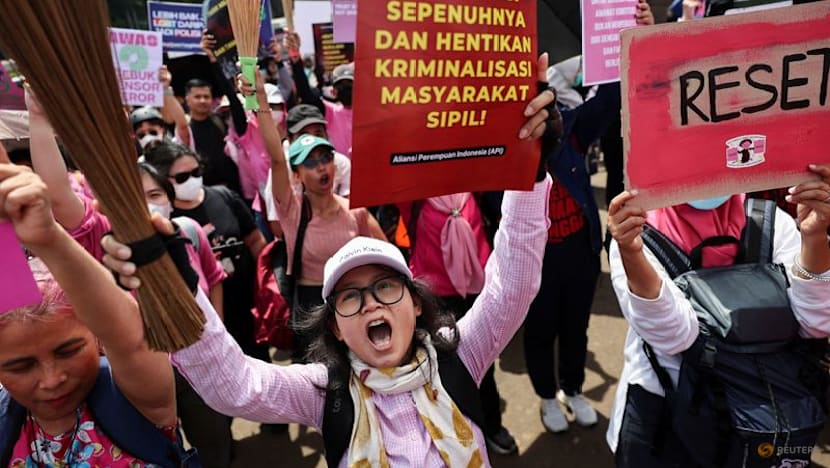
Prabowo will have to convince Indonesians he is capable of managing large-scale disaster responses and reconstruction efforts, observers said.
They also expect Prabowo’s policies and programmes will continue to grab headlines in 2026. Chief among these is the free nutritious meal initiative, known to Indonesians as MBG, which has caused food poisoning affecting more than 10,000 children.
Prabowo has downplayed the issue, saying on Sep 29 that these cases represented only “0.00017 per cent” of the 30 million children benefiting from the programme every day.
Despite calls to stop or scale back the programme, Indonesia plans to double the number of beneficiaries – and its 171 trillion rupiah (US$10.2 billion) budget – in 2026.
“Spending on the MBG should be reduced because it diverts funds from other allocations such as education and healthcare,” said Bhima Yudhistira, executive director of think tank Center of Economic and Law Studies (CELIOS).
Debate is also set to continue on Prabowo’s proposal to end direct regional elections to select governors, mayors and regents, known in Indonesia as Pilkada.
“Proposals such as eliminating Pilkada would represent a politically risky shift, likely to face resistance from coalition partners and regional elites who depend on local elections for legitimacy,” Dedi of Global Counsel said. Analysts have also said it would weaken democracy.
Indonesia’s lawmakers are set to begin discussions on revisions to election rules in 2026, with a House committee that will draft the election bill expected to be formed by the end of January.

ECONOMIC CHALLENGES
Beyond politics, cost of living pressures and the economy will remain the primary concern for the region of about 680 million people, experts said.
Countries continue to navigate the “Trump tariffs” and global trade volatility.
In Indonesia, a joint study by marketing company Inventure and research firm Alvara, released on Dec 9, found 35 per cent of 600 respondents saying they were saving less money in 2025 than the previous year. Ten per cent said they were able to save more, while the rest said they were saving about the same amount.
Meanwhile, the Association of Indonesian Automotive Industries (Gaikindo) reported that car sales from January to October 2025 totalled just 634,844 units, a 10.6 per cent decline compared with the same period in 2024.
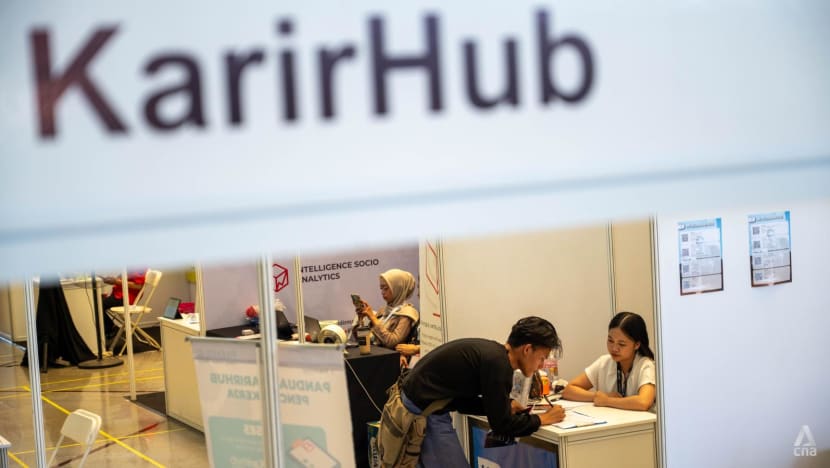
Tauhid Ahmad, a senior economist at the think tank Institute for Development of Economics and Finance (INDEF), said these figures showed that Indonesia is seeing a decline in household consumption and people’s ability to save.
“Looking at (savings) data and other indicators such as automotive sales, which often serves as a proxy for consumption, the problem (of sluggish household consumption) is indeed serious,” Tauhid said.
Household consumption contributes around 54 per cent of Indonesia’s gross domestic product of US$1.44 trillion. Around 40 per cent of consumption is spent by the middle class population whose number has been dwindling since the pandemic.
The World Bank noted in its latest “Indonesia Economic Prospects” report, released on Dec 16, that although Indonesia saw a 1.3 per cent increase in employment between August 2024 and August 2025, the gains were concentrated in lower-paying sectors such as lower-value services and agriculture.
Real wages have been trending downwards since 2018, and the structure of employment is becoming increasingly polarised, with middle-skilled jobs shrinking relative to both lower- and high-skilled roles, the organisation noted.
“These patterns are weighing on household consumption,” said Carolyn Turk, the World Bank’s director for Indonesia and Timor-Leste, at the report’s launch, as reported by Jakarta Globe.
If unaddressed, sluggish consumption could force companies to downsize or even close, experts said. If it happens, a vicious cycle emerges as there will be layoffs and less income for people to make purchases.
“Finding work in the formal sector is becoming increasingly difficult, with a growing wave of layoffs forcing people to rely on online loans just to survive,” said Bhima of CELIOS.
Finance minister Purbaya Yudhi Sadewa said on Dec 23 that 79,000 people have lost their jobs between January and November, indicating an economic slowdown.The figure was higher than the 77,000 jobs lost in 2024.
“Layoffs happen when demand is extremely weak. This year, the economy has been slow throughout the first 10 months,” he said, as quoted by Tempo.
Indonesia has introduced a number of incentives and cash aids to stimulate the economy, but experts said the impact has been minimal.
Meanwhile, job-creating investment remains sluggish amid the threat of tariffs by the US. “Foreign investors are largely in a wait-and-see mode, which is why foreign direct investment stagnated in 2025 and this is likely to continue,” said Tauhid of INDEF.
Trump imposed a 19 per cent tariff on Indonesia after a preliminary agreement in July but details of the trade deal were not finalised until late December.
Speaking after meeting US Trade Representative Jamieson Greer, Indonesian Coordinating Minister for Economic Affairs Airlangga Hartarto said on Dec 22 that both countries have agreed on all substantial issues for a tariff deal, paving the way for the signing of an agreement by presidents Prabowo and Trump at the end of January.
Airlangga said the US wanted access to Indonesia's critical minerals and had agreed to give tariff exemptions to its palm oil, tea and coffee.
ASEAN likely to see forthright diplomatic style
The Philippines’ chairmanship of the Association of Southeast Asian Nations (ASEAN) in 2026 will be closely watched because the country has been more explicit than many ASEAN members in naming geopolitical realities, especially when it comes to the South China Sea, said analysts.
Khoo Ying Hooi of Universiti Malaya's International and Strategic Studies Department told CNA that the Philippines is likely to bring a more forthright diplomatic style.
“We may see stronger language on maritime security, international law and external pressures in the region. The challenge will be how far the Philippines can push this without triggering pushback from more cautious or China-leaning members,” she said.
While Brunei, Malaysia, the Philippines and Vietnam are the ASEAN countries that have overlapping claims with China in the South China Sea, the Philippines and Beijing have had high-profile clashes over the issue and traded accusations about each other’s actions.
Khoo said that the Philippines will still have to work within ASEAN’s constraints, as the chairmanship was about agenda-setting, and not command.
“So the real test will be whether Manila can translate clearer positions into collective action, or whether it ends up settling for carefully balanced statements to preserve unity,” she said.
Teuku Rezasyah, an international relations lecturer at Indonesia’s Padjadjaran University, said it is important for the Philippines to advance the Code of Conduct (CoC) for the South China Sea. In 2023, ASEAN and China agreed on guidelines to accelerate negotiations, with a goal of completing the code within three years.
ASEAN has 11 member states, with Timor-Leste joining in 2025.
Similarly, Thailand’s economic outlook was “not going to be that rosy”, said Pavida Pananond, a professor of international business at Thammasat University.
Economic expansion has been sluggish by regional standards, with GDP growth expected to hover below 2 per cent, even as neighbours like Vietnam and Indonesia have posted stronger rebounds from COVID-19.
Thailand also remains in a kind of “dual dependency”, she explained, exporting to the US and relying on imports from China, a difficult path to walk during a period of geopolitical turbulence.
Vietnam, in particular, has attracted manufacturing investment that once flowed to Thailand.
While headline indicators show some resilience in exports and tourism, deeper structural problems continue to weigh on growth, incomes and consumer and investor confidence.

Thai household debt remains among the highest in Asia relative to GDP. Many Thai families are heavily leveraged, limiting their ability to spend and absorb new shocks, while informal lending remains widespread, exacerbating debt issues.
“I'm sure that if you look at Bangkok, it might not appear that we are hurting badly. But I think that life has become quite tough for Thai people,” Pavida said.
Debt relief schemes and moratoriums have provided temporary breathing space, but experts say they postpone rather than resolve the underlying problems.
Election cycles have tended to favour short-term relief over long-term restructuring. It reinforces public scepticism about whether politics can still deliver meaningful economic change, Pavida added.
“People are losing hope in whether politics can lead to real and new changes that we need. Never before have I seen the younger generation feel that they probably would want to leave Thailand if they could.”
Malaysia, meanwhile, is poised to carry its 2025 growth trajectory into the new year.
Malaysia's resilience in 2026 will likely depend on its ability to transition from trade-led growth to a model supported by domestic consumption and private investment, said economists.
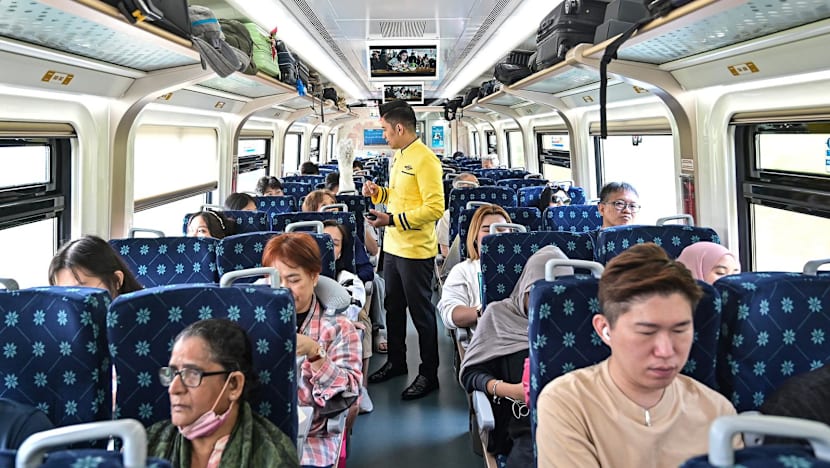
According to Sunway University economics professor Yeah Kim Leng, Malaysia’s 4.7 per cent growth through the first nine months of 2025 — despite global tariff pressures — is a clear indicator of its economic health.
“Even though trade growth slowed significantly, our economy didn't buckle. The 2026 outlook will likely gain from current growth momentum,” he told CNA.
He said the outlook this year will be tempered by heightened global volatility.
“2026 will bring even greater uncertainty as the global economy grapples with shifting trade policies and escalating geopolitical conflicts,” he said.
Lee Heng Guie, executive director of the Socio-Economic Research Centre, echoed Yeah’s views and said 2026 would also likely be a “payback period” for Malaysia.
Its robust export figures for 2025 were partially artificial, driven by companies “front-loading” shipmentsbefore the 19 per cent US reciprocal tariff fully impacted supply chains, he said.
"Once these numbers normalise, we could see a significant slowdown in the external outlook,” he said.
According to Lee, Malaysia has not yet seen the “full extent” of the US tariff regime, pointing to the current exemption for semiconductors as an example.
Trump has spoken about plans for “fairly substantial” tariffs on semiconductor imports to protect US industries.
In a research note looking ahead at 2026, TA Securities - a stockbroking and financial services firm - said if implemented, such tariffs would have major implications for Malaysia.
In 2024, Malaysia’s electrical and electronics (E&E) exports to the US reached a record high of nearly RM120 billion. Semiconductors accounted for RM60.6 billion of the total E&E shipments to the American market.
US tariffs on semiconductors would likely reduce Malaysia’s GDP growth by about 0.6 per cent points in 2026, TA Securities said.
Yeah, however, is optimistic about Malaysia’s employment situation, saying that the current unemployment rate of 3 per cent - its best level in almost 10 years - is a sign of a healthy economy.
“This 'near-full employment' is generating sufficient job growth to sustain domestic consumption," he said.
The fastest growing economies in Southeast Asia in 2026 are expected to be Vietnam and the Philippines, with the World Bank estimating their GDP growth at 6.1 per cent and 5.4 per cent respectively, according to its October 2025 East Asia and Pacific Economic Update.
Cambodia, Laos, and Myanmar are expected to record GDP growth of 4.3 per cent, 4.1 per cent, and 3.0 per cent respectively.