Shangri-La Dialogue 2026: Five things to watch
Asia's top security summit, hosted in Singapore, opens against a backdrop of mounting geopolitical tensions and questions about US priorities in the region.
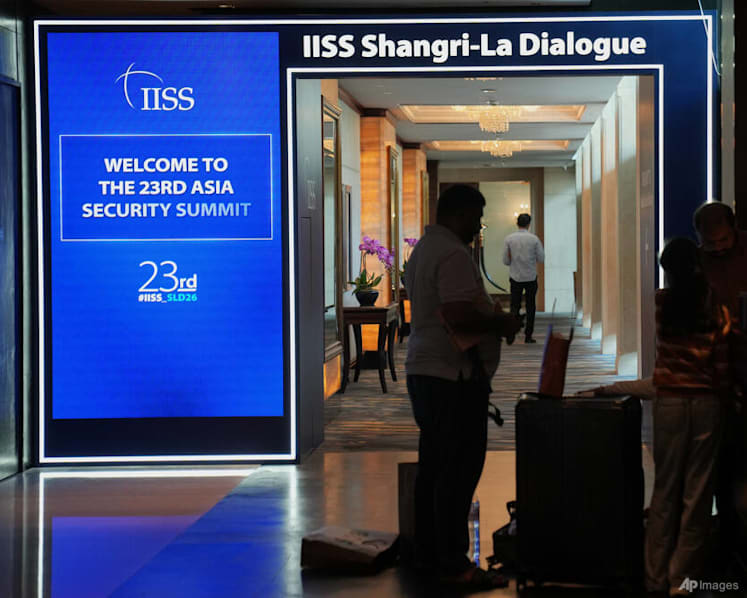
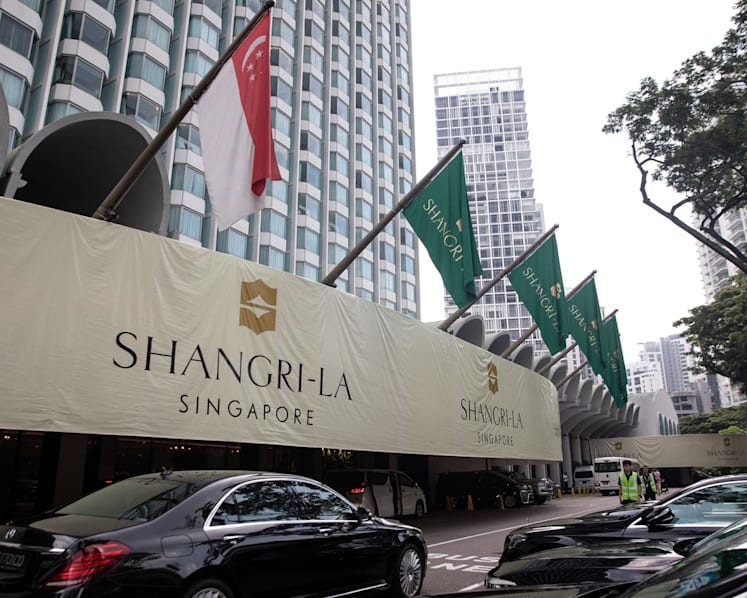
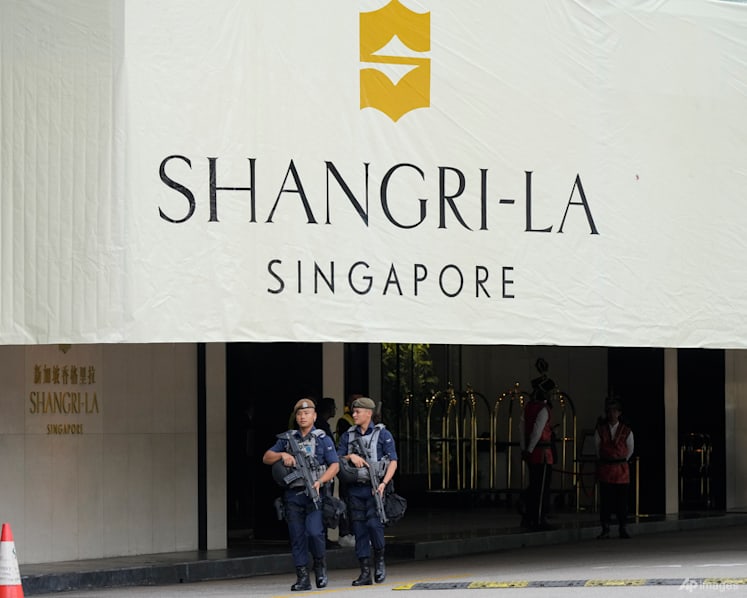
A man stands near the entrance of the Shangri-La Hotel, the venue for the International Institute for Strategic Studies (IISS) Shangri-La Dialogue, Asia's annual defense and security forum, in Singapore on May 28, 2026. (Photo: AP/Achmad Ibrahim)

This audio is generated by an AI tool.


SINGAPORE: Defence leaders, military chiefs and security experts from around the world are gathering in Singapore for the Shangri-La Dialogue, Asia’s top security summit, which begins on Friday (May 29).
Held against a backdrop of heightened geopolitical tensions, the annual meeting comes amid conflicts in the Middle East and Europe, as well as questions about the United States' long-term commitment to the Indo-Pacific.
Washington's strategic priorities, alongside China's rapid military modernisation and growing assertiveness in the region, are also expected to dominate discussions over the three-day forum.
The summit will bring together representatives from 44 countries, including 54 ministerial-level delegates and more than 42 chief of defence forces and senior defence officials from across the Asia-Pacific and Europe.
Vietnamese leader To Lam opened the summit with a keynote address on Friday evening, while US Defence Secretary Pete Hegseth is expected to take the stage on Saturday in one of the most closely watched moments of the summit.
Here are five themes to watch at this year's Shangri-La Dialogue.
US ROLE IN REGION AMID IRAN WAR
Hegseth is expected to outline Washington's Indo-Pacific strategy in his address on Saturday, as the Trump administration navigates overlapping crises in the Middle East and ongoing tensions in Europe.
Regional allies will be watching for assurance that the US remains committed to the Indo-Pacific, amid concerns that Washington could be overstretched or increasingly distracted.
"There will likely be some continued anxiety over the unpredictability and volatility of US policy, and the consequences for stability," said Chong Ja Ian, a political scientist at the National University of Singapore.
The Iran war has thrown the global economy into disarray, driving up oil prices and feeding inflationary pressures across Asia’s import-dependent economies.
"The most pressing issue for Asia would be the US-Israel-Iran conflict and its effects on energy supply," he told Reuters.
Meia Nouwens from the International Institute for Strategic Studies said security developments are now directly affecting energy flows and economic stability in Asia.
"Security ... is having a direct impact on energy security, energy flows to this part of the world, that's impacting economies and growth," she told CNA’s Asia First on Friday.
"I imagine lots of countries will be asking questions about this at the Shangri-La Dialogue, questions around commitments to this part of the world as well," said the senior fellow for Chinese security and defence policy.
Despite the concerns, Nouwen said she expects the US' commitment to the Indo-Pacific to remain firm and that will be the key message that the US would want to send.
US-CHINA RELATIONS
US-China relations will, as in previous years, loom large over the summit.
In last year's edition of the Shangri-La Dialogue, Hegseth warned of an imminent China "threat", drawing a sharp rebuke from Beijing, which accused him of “vilifying” China.
More recently, during US President Donald Trump's visit to China, both sides signalled cautious optimism, with Trump highlighting "fantastic trade deals" and Chinese President Xi Jinping describing the trip as a “milestone visit” that helped establish a “constructive strategic stability”.
"In the aftermath of the summit, I suspect he will tread carefully on China," said Bonnie Glaser, head of the Indo-Pacific Program of the German Marshall Fund think-tank, adding that Hegseth might further push allies and partners to spend more on defence.
Notably, Chinese Defence Minister Dong Jun will skip the summit for the second consecutive year. China will instead send a delegation from the People's Liberation Army National Defence University.
The lower-level delegation will be led by the university's Major General Meng Xiangqing.
Whether or not this might potentially limit the prospects for high-level military engagement between Washington and Beijing at the dialogue remains to be seen.
Nevertheless, discussions are still expected to focus on how smaller states manage US–China rivalry, as well as maritime flashpoints in the South China Sea and the Strait of Malacca.
TAIWAN
Taiwan is expected to remain a central point of concern at the dialogue, even in the absence of China’s defence minister.
The issue has taken on greater prominence in recent years, Nouwens said, driven in part by supply chain vulnerabilities and rising military activity around the island.
"One, perhaps following COVID-19, the understanding of Taiwan's important role in supply chains, and second of all, changing patterns of behaviour around Taiwan, particularly military activity that raises tensions," she said.
China has been ramping up the pressure on Taiwan, sending fighter jets, drones and other military aircraft around the island.
Taiwan remains a critical hub in global semiconductor production, anchored by companies such as TSMC, the world’s largest contract chipmaker and key supplier to firms including Nvidia and Apple.
"Someone has quoted to say that chips are the new oil, so ... a Taiwan Strait blockade or an economic quarantine would have a huge impact," Nouwens added.
During Trump's visit to Beijing, Xi warned that the US and China could clash over Taiwan if the issue is not handled properly.
“President Xi and I talked about Taiwan,” Trump told reporters after departing Beijing.
"I didn't make a comment on it, I heard him out. On Taiwan he feels very strongly, I made no commitment either way," he added.
JAPAN'S MAJOR DEFENCE SHIFT
Japan's evolving security posture is expected to be another key talking point.
Under Japanese Prime Minister Sanae Takaichi, Japan has accelerated efforts to strengthen its military, deepening security ties with regional partners amid concerns over China's growing influence.
In April, it unveiled its biggest overhaul of defence export rules in decades, scrapping restrictions on overseas arms sales and opening the way for exports of warships, missiles and other weapons.
"No single country can now protect its own peace and security alone, and partner countries that support each other in terms of defence equipment are necessary," Takaichi said then.
Countries such as the Philippines welcomed the change, but China was not impressed.
"China is deeply concerned about this," foreign ministry spokesperson Guo Jiakun told a daily press conference, adding that Beijing "will remain highly vigilant" and resolutely resist any reckless actions by Japan towards a new form of militarism.
Tensions between Asia's two largest economies have also risen over Taiwan.
Japan has steadily increased defence spending in recent years to 2 per cent of GDP, and Takaichi's government is expected to announce further rises this year when it releases a new security strategy.
With Tokyo expected to announce further increases later this year, delegates will be watching for how Tokyo balances its expanding security role with its complex relationship with Beijing.
MARITIME SECURITY AND FREEDOM OF NAVIGATION
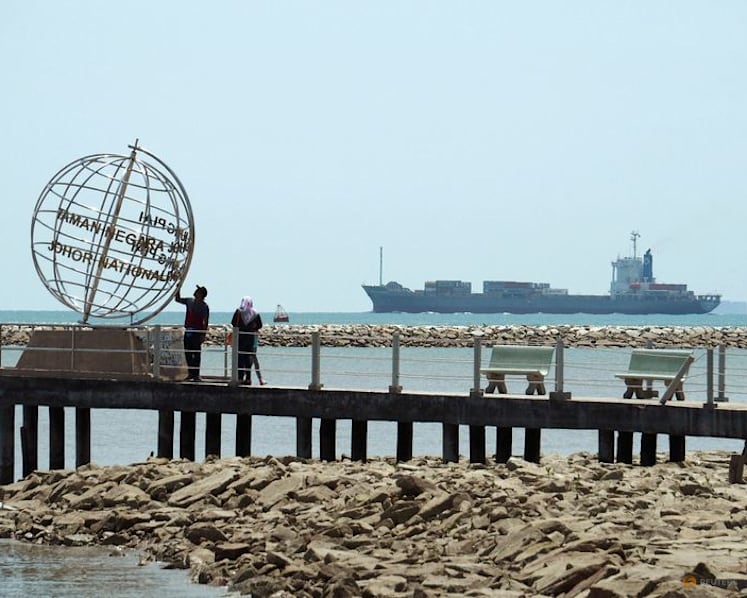
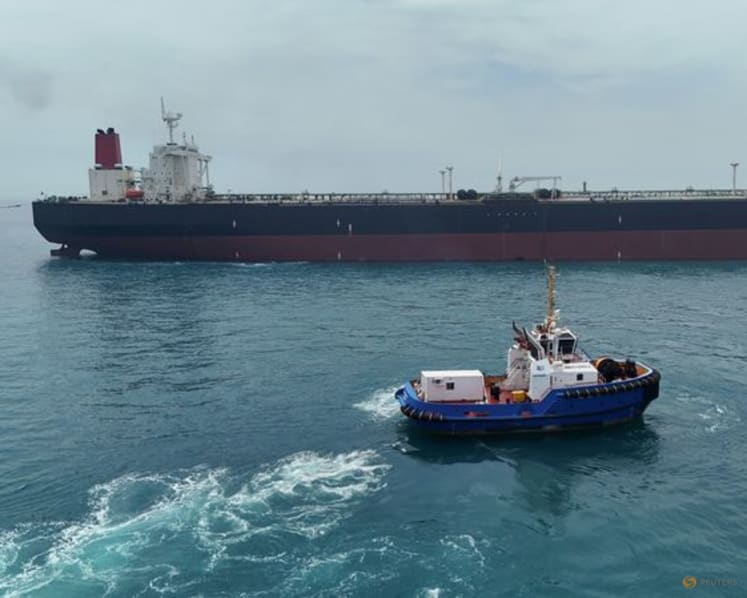
Maritime security is likely to be a recurring theme, spanning tensions in the South China Sea to concerns over key global shipping routes.
The issue has gained urgency amid continued uncertainty over shipping through the Strait of Hormuz, a critical artery for global energy supplies.
In the South China Sea, ties between China and the Philippines have been strained over competing territorial claims, with Beijing recently conducting combat readiness patrols near the Scarborough Shoal, in response to an annual regional drill earlier this year involving Japanese, American, Australian and Philippine forces.
Freedom of navigation is also expected to feature prominently, with several countries reiterating opposition to any attempts to change the status quo in regional waters through force.
Singapore has also reaffirmed its stance that freedom of passage in international waterways is a right, not a privilege, amid broader concerns about global shipping chokepoints.
Closer to home, the Strait of Malacca may also be discussed after earlier remarks from an Indonesian minister suggesting possible tolls for ships. He later clarified that his country had no intention of doing so.