High transport costs, slow hiring: Southeast Asia businesses brace for impact amid Middle East war
For sectors such as manufacturing, logistics and construction, where energy forms a bulk of operating expenditure, uncertainty can translate into tighter margins and more cautious expansion plans, say businesses and experts.
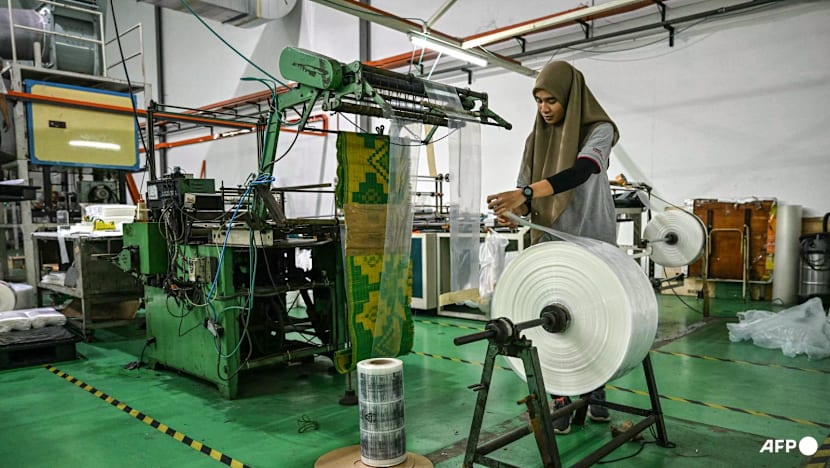
A worker inspects low-density polyethylene plastic products at a plastic factory in Klang, Selangor. (File Photo: AFP/Mohd Rasfan)

This audio is generated by an AI tool.



SINGAPORE: For Roy Ang, who runs a plastic bag manufacturing business in Johor, the impact of the Middle East conflict is already showing up in his cost sheets.
Polyethylene resin - a petroleum-based raw material used to produce plastic bags for his food and medical clients across Malaysia and Singapore - has jumped by US$110 to US$150.
It has jumped from a range of US$1,050 to US$1,120 prior to the war to between US$1,160 and US$1,270 per metric tonne, a 10 to 13 per cent rise in recent weeks.
Some major producers are holding back quotations until May or “until further notice” as oil prices climb while others have cut production altogether and are selectively supplying to long-term customers.
Resin prices tend to increase for a few months and then stabilise at a higher baseline, of about 10 per cent to 25 per cent higher than previously.
“These increases would inevitably eat into margins as well as higher prices for customers,” Ang, 50, told CNA.
“What we are facing right now is suppliers holding back on pricing and stock allocation so even with enough cash flow, we might not get the stock.”
With raw materials taking up 60 per cent to 75 per cent of his business’ cost structure, Ang expects to raise prices for his customers, who are mainly in F&B, medical equipment production and cargo and electronics sectors, to a minimum of 5 per cent to 10 per cent.
Escalating tensions in the Middle East have pushed global oil prices higher, raising fears of supply disruptions through key shipping routes such as the Strait of Hormuz, which handles about a quarter of the world’s seaborne oil trade.
For businesses across Southeast Asia, the immediate concern is not only higher input costs but also heightened uncertainty.
Oil prices have fluctuated wildly as traders struggle to gauge the war’s impact, nearly doubling since the start of the conflict. Brent crude futures, the international crude benchmark, opened at US$106.13 a barrel on Monday morning (Mar 16), a peak since June 2022.
Energy markets have also reacted as prices of liquified natural gas - of which about 90 per cent from Qatar and the United Arab Emirates are shipped to Asia - are 80 per cent higher than before the conflict.
“Unpredictable fluctuations make it difficult for businesses to plan operating budgets, set prices and make investment decisions,” said Malaysian Employers Federation president Syed Hussain Syed Husman.
“Companies face challenges in forecasting production costs, managing long-term supply contracts and managing competitiveness in export markets.”
For sectors such as manufacturing, logistics and construction, where energy forms a bulk of operating expenditure, that uncertainty can translate into tighter margins and more cautious expansion plans.
“The prevailing approach among SMEs (Small and medium-sized enterprises) is one of careful cost management and close monitoring of developments,” said Chin Chee Seong, president of the SME Association of Malaysia.


HIGHER TRANSPORTATION COSTS, LOGISTIC CHARGES IF CONFLICT PERSISTS
For now, the direct impact on operating costs for Malaysian SMEs remains “relatively limited”, Chin added.
Many companies are adopting a cautious “wait-and-monitor” approach instead of reacting immediately,
“One key reason for this is that domestic fuel prices in Malaysia remain stabilised by government subsidies,” he added, pointing to Prime Minister Anwar Ibrahim’s recent remarks that subsidised RON95 petrol prices could be maintained for the next one or two months.
However, Chin warned that if oil prices remain elevated, the impact could gradually seep into businesses through higher transport costs, logistics charges, insurance premiums and rising prices for petroleum-based raw materials.
“Rising global fuel prices increase the cost of freight, warehousing and last-mile delivery, which are essential components of modern production and retail supply chains,” he said.
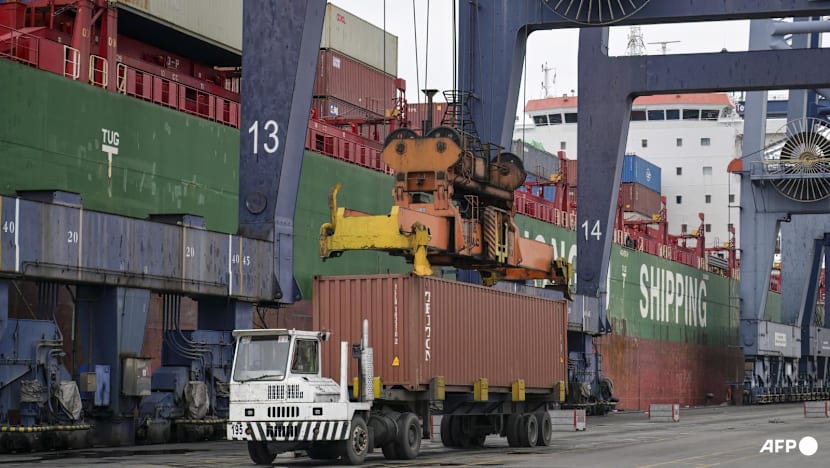
In Indonesia, logistics operators are already seeing heightened cost pressures.
“Within the first 10 days of the war, we have seen about a 25 per cent increase in container shipping rates,” said Mahendra Rianto, the chairman of Indonesia’s Logistics Association.
Transport dominates logistics expenses for Indonesian businesses, accounting for around 40 per cent of total logistics cost, he said. Fuel alone could represent 30 per cent to 50 per cent of transport costs.
In a statement on Mar 10, Indonesia’s Logistics and Forwarders Association warned that international logistics costs “could rise 20 (per cent) to 40 per cent in the short term” if disruptions in key shipping routes persist.
The impact of the price shocks varies across the region, said senior ASEAN economist at OCBC bank Lavanya Venkateswaran.
Thailand, the Philippines and Vietnam are most exposed to sustained high energy prices as large net energy importers, she said.
“The absence of retail fuel subsidies in Singapore and the Philippines implies more direct pass-through of higher global oil prices onto retail fuel prices,” Venkateswaran added.
Some businesses are already bracing for higher transport costs.
Winston Wang, who runs a dim sum wholesale business in Singapore with a factory in Vietnam, expects logistics costs in and out of Singapore and Vietnam to increase around 20 per cent to 30 per cent.
Syed Hussain of the Malaysian Employers Federation said that businesses are also seeing hiring slowdowns as energy cost volatility influences business planning, hiring decisions and investment behaviour.
BUSINESSES ADOPTING A MIXED APPROACH
Across Southeast Asia, companies are walking a tightrope between absorbing higher costs and passing them on to customers, said industry players and experts.
Businesses are taking a cautious and balanced approach, with some initially absorbing part of the higher costs to remain competitive and avoid passing sudden price increases to customers, said Chin of the SME Association of Malaysia.
“However, some companies have begun to gradually pass on a portion of the increased costs, particularly in sectors where transportation and raw material expenses are significant,” he told CNA.
Similar to Ang’s plastic bag manufacturing business in Johor where he has to pass on the higher costs to customers, Wang who runs the dim sum wholesale business said prices for his products are likely to rise about 10 per cent.
“In Vietnam, petrol has doubled within three days. We send our dim sum by air to other cities so it will impact our operations,” he told CNA.
On Monday, Vietnamese authorities warned the country’s aviation industry to prepare for potential flight reductions from April after China and Thailand halted exports of jet fuel. This may further worsen the situation as Vietnam imports more than two-thirds of its jet fuel, with 60 per cent coming from China and Thailand.
Wang's company ships products to Da Nang, Hanoi, Phu Quoc and also Singapore.
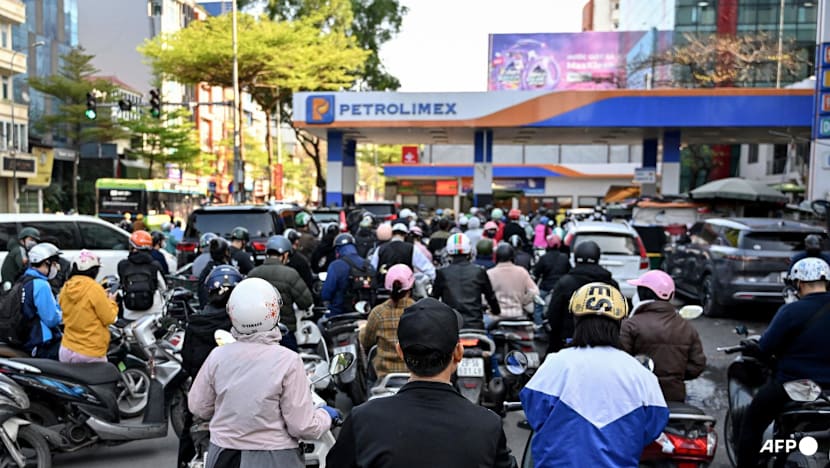
Gasoline prices in Vietnam have risen by 50 per cent since the start of the war as of Tuesday morning, according to the Global Petrol Prices website, with diesel up 66 per cent.
The Singaporean subsidiary of Indonesian shipping company Samudera said higher bunker prices have pushed up operational costs even though it does not currently operate ships in the Gulf region.
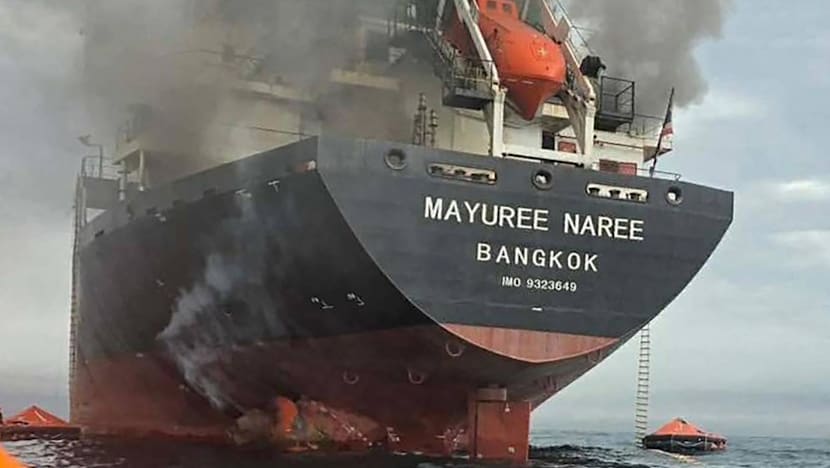
Bunker prices refer to the cost per metric tonne of fuel used by ships for propulsion and operations. Bunker premiums hit a record high on Mar 11, with fuel oil cargo quotes ranging above US$200.
“We believe most shipping lines will look into recovering these costs through additional surcharges,” Bani Mulia, Samudera Group CEO told CNA, who said the company currently operates ships in Southeast Asia, the Indian Sub-continent and East Asia.


Businesses face a “difficult balancing act” when dealing with volatile energy costs, said Syed Hussain of the Malaysian Employers Federation.
“Many F&B operators have quietly adjusted menu prices by small increments of RM0.50 (US$0.13) to RM2 or reduced portion sizes rather than implementing large price increases.
“Aggressive price increases could reduce consumer demand, especially in the current environment where households are also experiencing rising living costs,” he said.
Competitive pressures, price-sensitive consumers and contractual pricing arrangements limit the extent of price increases to avoid losing market share, Syed Hussain added.
Export-oriented industries face “even greater constraints” as they compete directly with producers in other countries.
“Any significant prices could undermine their position in international markets where buyers could easily switch to alternative suppliers,” Syed Hussain told CNA.


In Thailand, the Federation of Thai SMEs said that Thai exports to the Middle East are likely to take a hit due to logistical difficulties in the region, reported local news outlet Thai PBS.
In 2025, Thai exports to Iran were valued at US$137 million, with SMEs accounting for more than a quarter at US$38.4 million.
These SMEs mostly export machinery boilers, electrical machinery, automobiles and parts, fruits and vegetables, said Sangchai Theerakulwanich, the strategy chairperson of the federation.
The ongoing conflict and oil price surge are expected to disrupt trade routes and reduce demand from these markets, he told Thai PBS.
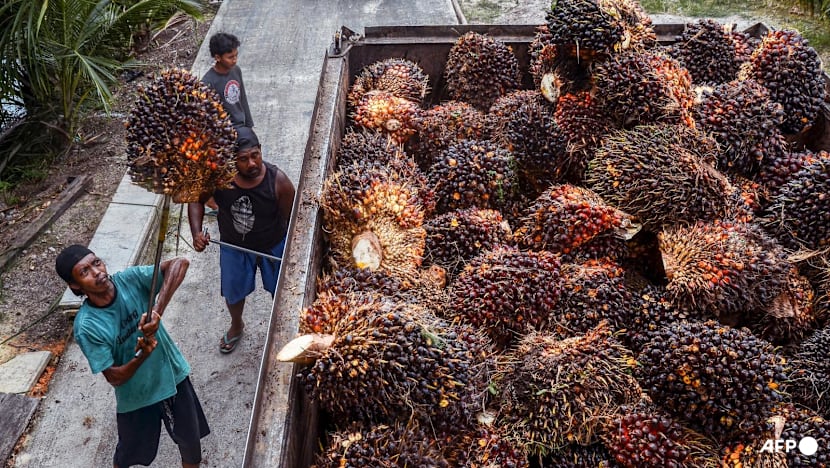
Over in Indonesia, the world’s largest exporter of palm oil, the sector has been hit by higher logistics and insurance costs, said Eddy Martono, chairman of Gapki, the Indonesian Palm Oil Association.
Eddy added that there has been up to a 50 per cent increase in freight and insurance costs.
“Other impacts include rising fertiliser prices and even potential fertiliser shortages if the war continues for a long time,” he told CNA.
Indonesian petrochemical enterprises have issued force majeure notifications to their respective buyers and suppliers, said Bhima Yudhistira, executive director of the Center of Economic and Law Studies (CELIOS) think tank.
Force majeure is a contractual clause that allows a party to be freed from liability when an event beyond its control prevents performance.
Among firms that have declared force majeure is Jakarta-based company PT Chandra Asri Pacific which operates the country’s largest integrated petrochemical complex, producing olefins and polyolefins, according to its website.
The firm has implemented precautionary measures to safeguard operational resilience across business units and adjust operating levels at its plants, it said in a statement on Mar 2, as reported by Bloomberg.
Meanwhile, Bhima of CELIOS also said that a considerable number of firms in Indonesia, especially those in the garment manufacturing sector, have resorted to workforce reductions or salary freezes to maintain financial solvency.
In Malaysia, businesses are responding by delaying expansion plans, slowing hiring and tightening operational spending and reviewing investment decisions, according to the SME Association of Malaysia.
Agreeing, Syed Hussain of the employers' federation said that companies considering new production lines or plant expansion are reassessing investment timelines as energy costs fluctuate.
“Energy-intensive manufacturers, particularly in electronics assembly, plastics and metal fabrication rely heavily on electricity for automated production lines and cooling systems,” said Syed Hussain.
“So when energy costs increase or fluctuate, companies often delay expanding production capacity, which in turn delays hiring additional operators, technicians or engineers,” he told CNA.
Companies may try to optimise existing manpower by reallocating shifts or increasing productivity before committing to new hires, and by relying more on temporary workers or overtime arrangements until cost conditions stabilise, he added.
Chin of the SME Association of Malaysia added that most SMEs in the country have become “more resilient and cautious” in managing their operations after going through the severe challenges during the COVID-19 pandemic and the pressures arising from the US tariff developments.
“These past experiences have encouraged businesses to strengthen their financial discipline, manage risks more carefully and maintain better cash flow buffers,” he said.
Fiscal strain for some governments
Beyond the pressure on businesses, experts say governments in the region are also facing mounting fiscal strain.
Venkateswaran of OCBC said countries such as Malaysia and Indonesia could face fiscal vulnerabilities given their state-funded fuel subsidies.
Malaysia has reiterated that it will maintain the current prices of subsidised petrol and diesel despite the surge in global oil prices.
However, the government’s fuel subsidy bill is projected to surge over four-fold to about RM3.2 billion per month, up from RM700 million previously, Finance Minister II Amir Hamzah Azizan said on Friday.
In Indonesia, Coordinating Minister for Economic Affairs Airlangga Hartarto said that it would be difficult to keep the fiscal deficit under a legal mandate of 3 per cent of GDP without cutting spending or reducing economic growth if oil prices remain elevated.
“The government is compelled to undertake fiscal revision by reallocating expenditure from programmes of lesser immediacy, including the free meals programme and the Nusantara Capital City project,” said Bhima of CELIOS.
The Nusantara project, launched under former President Joko Widodo in 2019, aims to relocate Indonesia’s administrative capital from Jakarta to East Kalimantan. He said that Jakarta’s traffic congestion, regular flooding, polluted air and sinking land surface made it no longer fit to be the nation’s capital.
Meanwhile, President Prabowo Subianto’s flagship free nutritious meals programme aims to provide meals to more than 80 million people, mainly schoolchildren and pregnant women.
In an interview with Bloomberg on Saturday, Prabowo said that he does not intend to cut funding for the programme, describing it as a “stimulus for growth at the grassroots level”.
He added that he is committed to fiscal discipline and would only approve a short-term increase in the deficit beyond 3 per cent of GDP if oil prices stay elevated for a sustained period, likening the situation to the COVID-19 pandemic when Indonesia’s fiscal deficit breached the legal limit for two years to allow for emergency spending.


FROM "STOP-GAP MEASURES" TO STRUCTURAL RESILIENCE
Governments across the region are already encouraging work-from-home arrangements, carpooling and reduced travel to conserve energy, but Venkateswaran of OCBC described these as only “stop-gap measures for the near-term”.
Thailand is requiring most government agencies to adopt full-time work-from-home arrangements as part of emergency efforts to reduce energy demand while the Philippines has sought to reduce fuel consumption by shifting government employees to a four-day work week.
In the interview with Bloomberg, Prabowo said that his government is also weighing up a four-day work week and more online meetings to reduce its oil demand.
Meanwhile, Malaysia is refining its proposal to implement work-from-home arrangements for the public sector, with a decision expected after Hari Raya Aidilfitri, Communications Minister Fahmi Fadzil said on Tuesday.
But experts say longer-term structural solutions will be needed if oil price volatility persists.
“Building resilience from domestic energy sources such as diversifying energy suppliers and sources to renewable energies will likely need to be prioritised,” said Venkateswaran of OCBC.
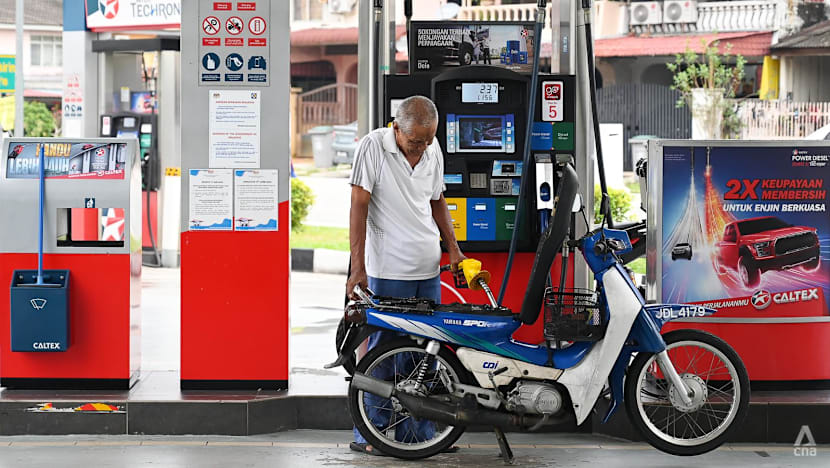
Malaysia’s economy minister Akmal Nasrullah Nasir also said on Sunday that the nation must accelerate implementation of its energy transition roadmap, particularly the development of renewable energy.
Indonesia’s Logistics and Forwarders Association (ALFI) said the country’s reliance on imported raw materials exposes a “vulnerability” when global shipping routes become unstable.
This is not the first time businesses have faced such shocks.
In a statement on Mar 10, ALFI cited tensions in the strait of Hormuz in 2019, when a series of attacks on oil tankers in the region had resulted in war risk insurance premiums for tankers to increase by about five to 10 times while freight rates rose by around 15 to 30 per cent.
More recently, the Red Sea crisis in 2024 saw container freight rates on Asia-Europe routes surge 100 per cent to 200 per cent due to shipping route diversions and heightened security risks, ALFI said.
Chairman of ALFI, Akbar Djohan, said Indonesia should accelerate industrial downstreaming to reduce reliance on imported raw materials and strengthen supply chain resilience to minimise the impact of external shocks.
“Our hope is that with maximum downstreaming, dependence on imported raw materials will decline and at some point, we can become self-sufficient and achieve national industrial sovereignty,” he said in a statement on Mar 10.
“Consider the steel industry (in Indonesia), how the reindustrialisation process can be accelerated using domestic raw materials such as iron ore, coal, limestone and others so they can be processed into finished products within Indonesia.”
The association said that by maximising the country’s natural resources through domestic value-added processing, Indonesia would not only strengthen its economic resilience but also create a “more integrated and efficient logistics system”.
Businesses could also explore financial hedging instruments to manage raw material price volatility, said Bhima of CELIOS.


Meanwhile, the Malaysian Employers Federation has called for predictable energy pricing frameworks, targeted support for energy-intensive sectors and incentives for energy efficiency and renewable adoption.
This includes stronger incentives for energy-efficient technologies – such as solar rooftops, renewable energy and energy management systems – alongside financing schemes to help SMEs invest in energy savings.
“A balanced approach, combining predictable pricing mechanisms, targeted transitional support for energy efficiency and policy stability will help companies navigate the current uncertainty while sustaining competitiveness, investment and employment,” said Syed Hussain.